What Is a Light Guide Plate (LGP)? Types, Materials & LED Use Cases
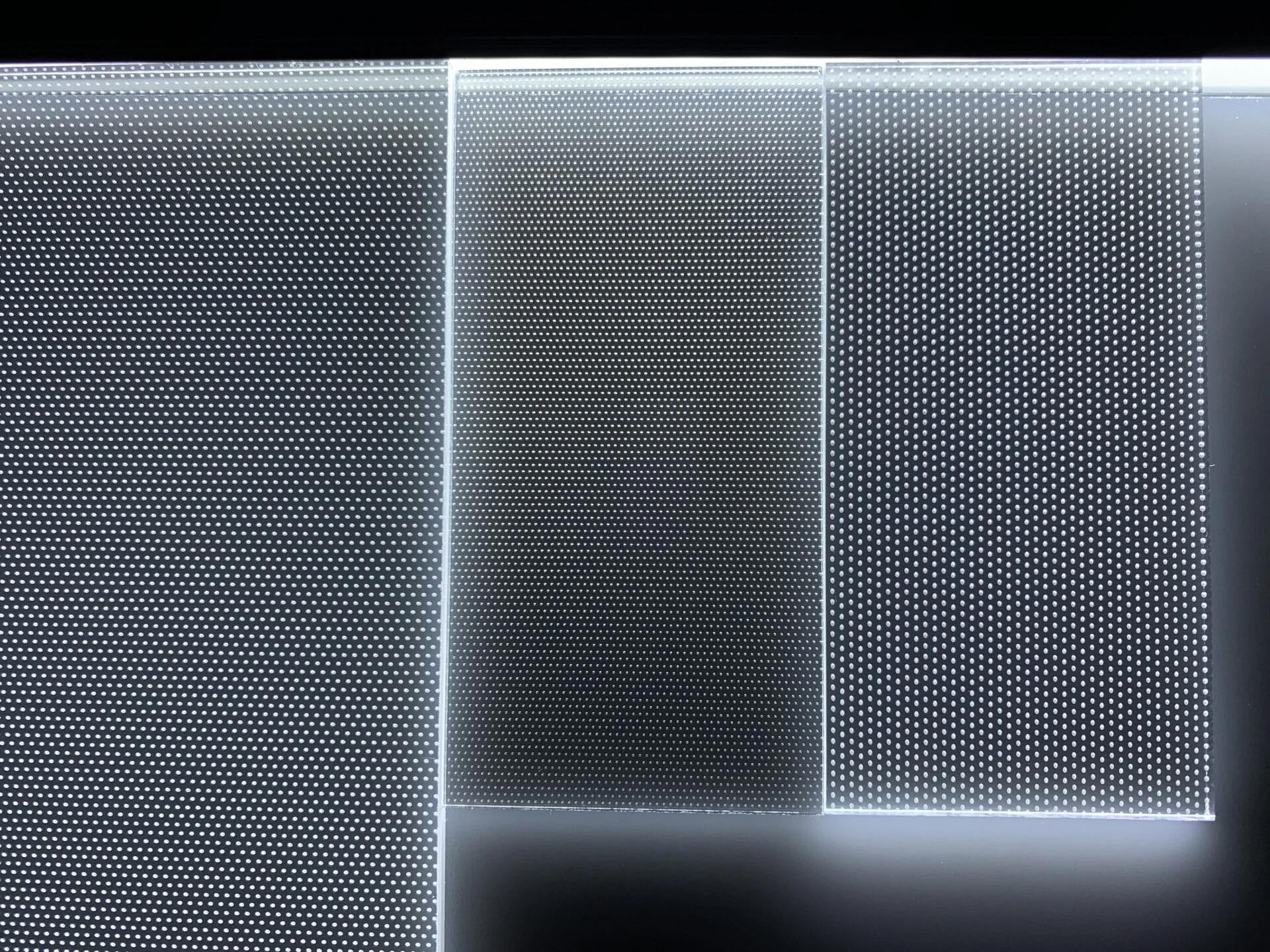
A Light Guide Plate (LGP) is a thin, transparent optical sheet typically made from optical-grade acrylic (PMMA) or polycarbonate (PC). It is designed to distribute light evenly across its surface by guiding light from edge-mounted LEDs and emitting it uniformly through the front face.
Originally developed for LCD backlight modules (BLUs), the LGP has evolved into a core optical component in LED panel lighting, architectural illumination, and decorative display systems.
The unique value of an LGP lies in its ability to transform directional LED light into a wide, uniform, and soft light source without glare, even in ultra-thin luminaires.
How Does LGP Work?
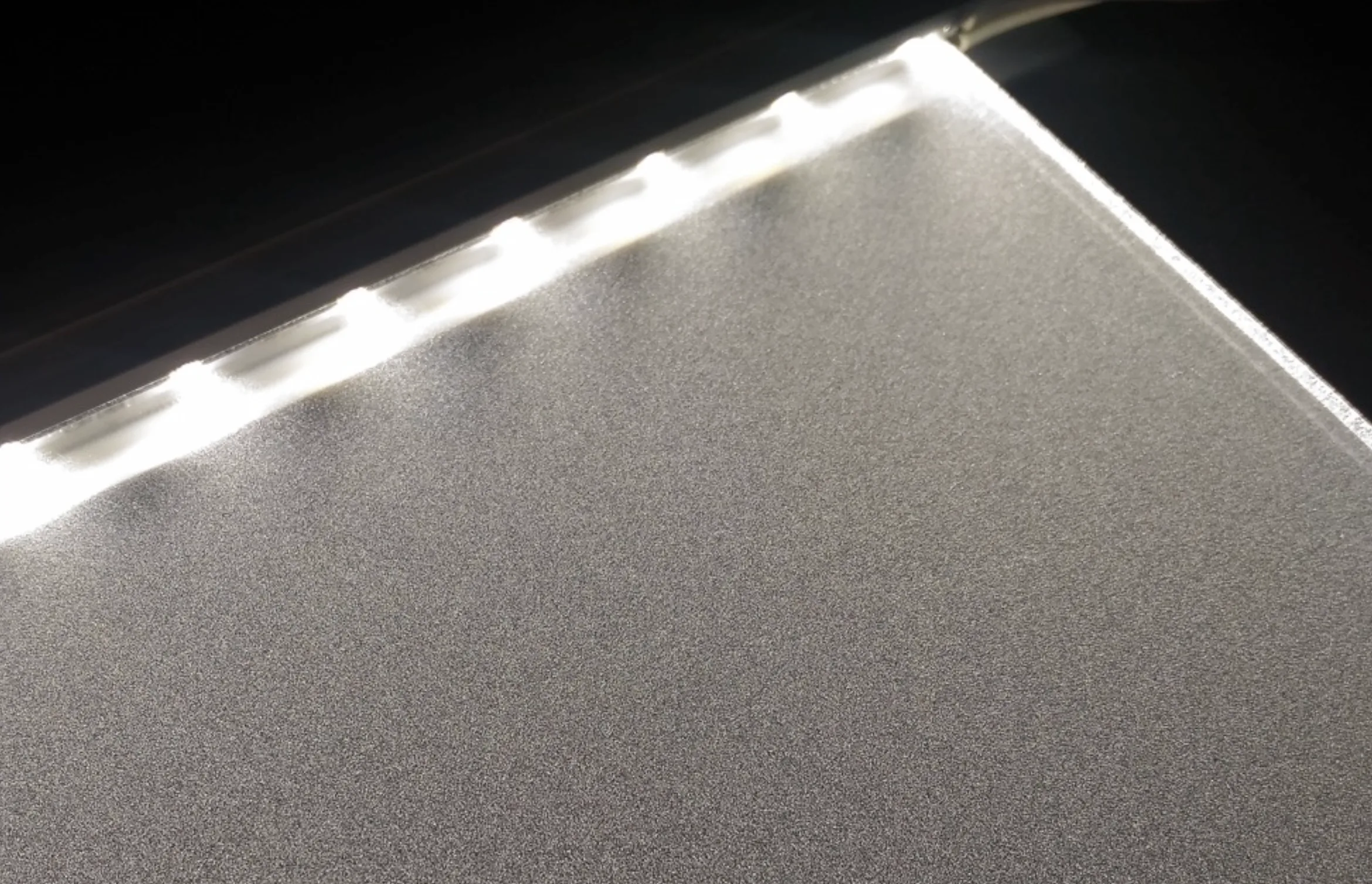
- Edge-Lit Illumination: LEDs are placed along one or more edges of the LGP. These edge-lit LEDs inject light into the plate.
- Internal Reflection: The light travels through the plate via total internal reflection (TIR), maintaining brightness and directionality within the optical guide.
- Patterned Extraction: Micro-patterns or laser-engraved dots on the surface of the plate scatter the light outward in a controlled way.
- Uniform Output: The dot density and size gradually change from the LED edge to the center of the plate to compensate for light attenuation, resulting in consistent brightness and uniform illumination.
This mechanism allows for extremely slim lighting solutions, minimizing the need for bulky housings.
Types of Light Guide Plates
By Manufacturing Method
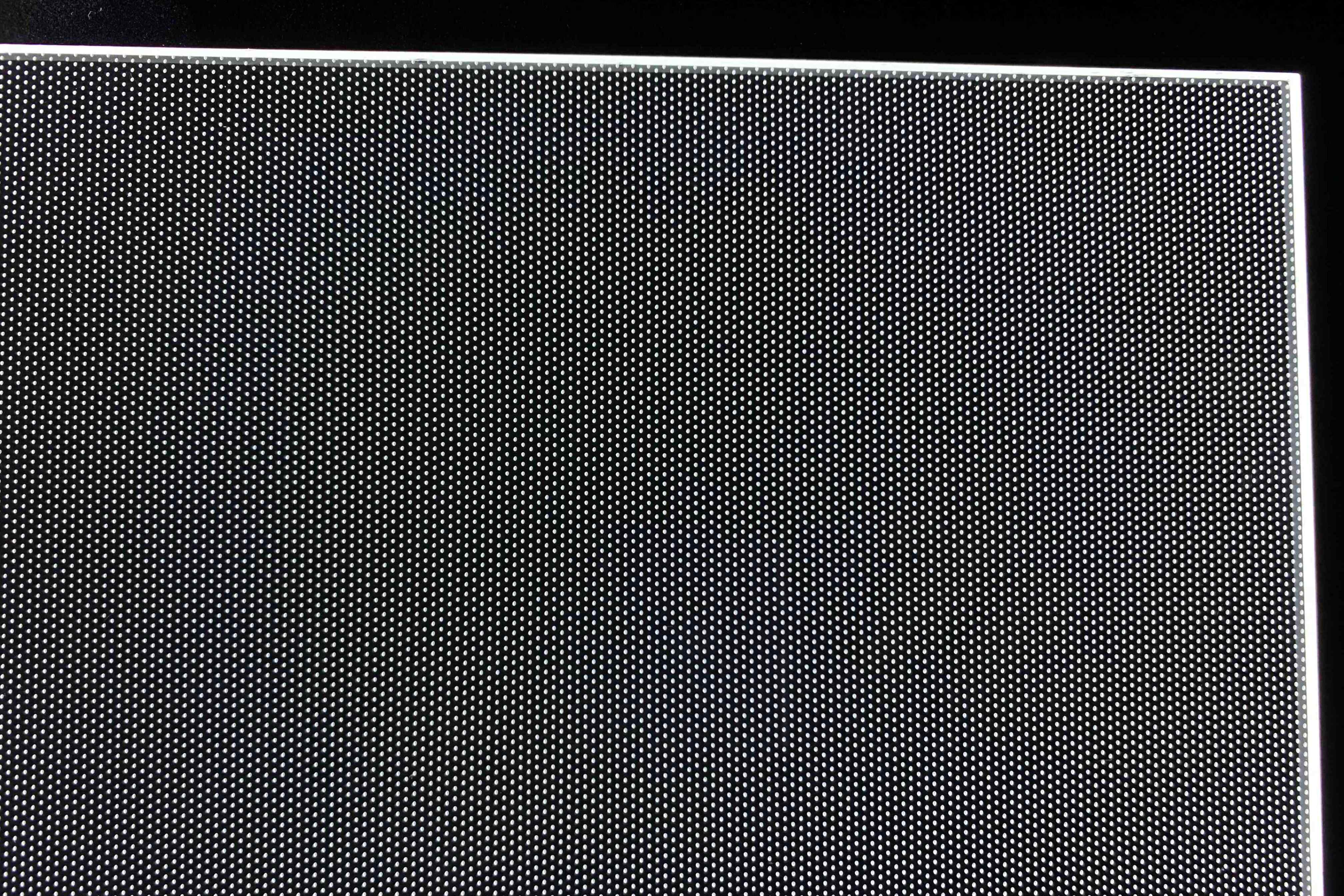
- Laser LGPs (Laser-Engraved): Microscopic dots are engraved directly onto the surface using a high-precision laser plotter. This method delivers excellent durability, optical consistency, and long product life, outperforming screen-printed alternatives in demanding environments.
- Screen-Printed LGPs: Dot patterns are applied using UV-curable ink. Lower tooling cost makes them suitable for mass-market applications, but optical stability degrades faster over time compared to laser-engraved versions.
- Injection Molded LGPs: The plate and its optical microstructure are formed together in a precision steel mold. Once a tool is qualified, every part is optically identical — making this the preferred route for mid-to-high volume production where unit-to-unit consistency is critical.
By Illumination Design
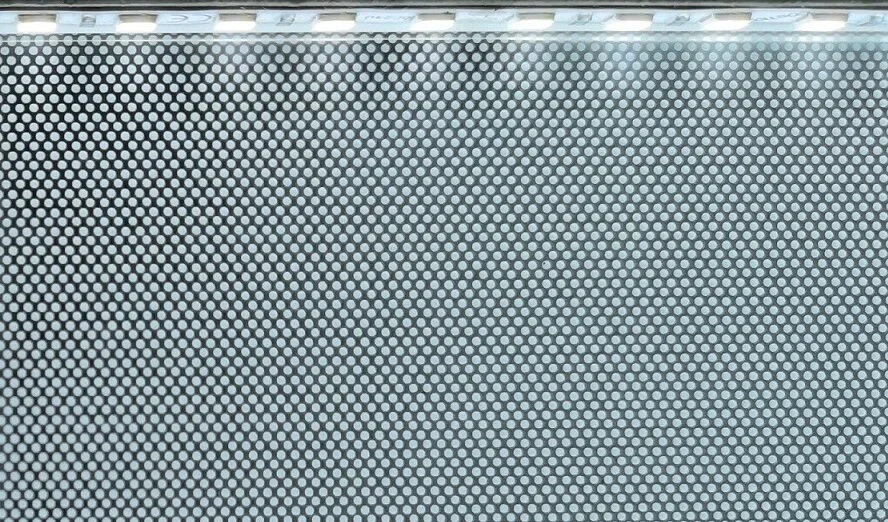
- Edge-Lit LGPs: LEDs are positioned along one or more edges of the plate. This design enables ultra-slim luminaires and is the dominant configuration in UGR<19 LED panels, office lighting, and architectural applications.
- Direct-Lit (Bottom-Lit): LEDs are mounted directly behind the panel. This produces a thicker fixture profile but is better suited for very large-format panels where edge-to-edge uniformity is difficult to achieve with edge lighting alone.
Front-Lit LGP (E-Ink & R-LCD Displays)
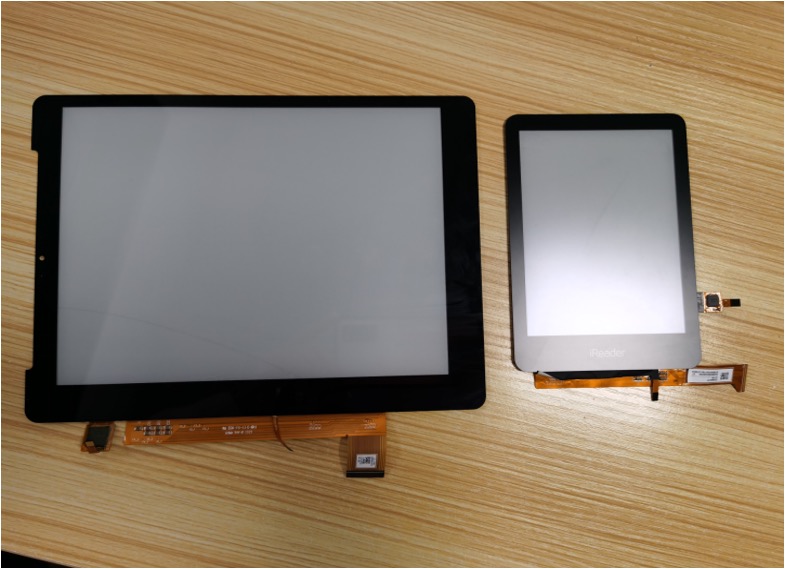
A specialized variant places the LGP in front of the display glass rather than behind it. Used with reflective technologies such as E-Ink and R-LCD screens, the front LGP redirects edge LED light downward onto the display surface, enabling readability in dark environments without a power-hungry backlight. This architecture is critical for e-readers, wearables, and industrial display panels.
By Optical Profile: Thin, Diffusive & Laser LGP
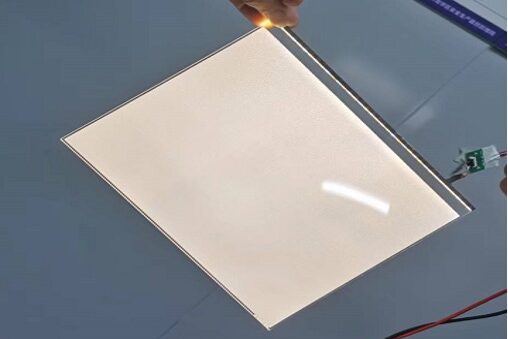
- Thin LGP: Ultra-slim profiles (standard 1 mm, custom up to ~3 mm) optimized for space-constrained applications, backlit displays, signage, and compact LED panels where fixture depth is critical. Thin LGPs rely on precise laser dot engineering to maintain full-surface uniformity within a minimal form factor.
- Diffusive LGP: Achieves uniform illumination through diffusion particles embedded directly in the PMMA substrate, no laser engraving or silkscreen printing required. Light scatters evenly across the panel, producing a visually smoother, softer output than dot-patterned alternatives. Best suited for panels up to 600 mm wide.
- Laser LGP: Precision-engineered using laser-engraved dot patterns for exceptional control of light extraction across large panel areas. Delivers superior brightness uniformity and long-term optical stability, the standard choice for high-performance LED panel and display applications.
LGP Materials: PMMA vs Polycarbonate
Material selection directly impacts optical performance, durability, and application suitability. The two dominant materials for LGPs are optical-grade PMMA (acrylic) and polycarbonate (PC).
| Property | PMMA (Acrylic) | Polycarbonate (PC) |
|---|---|---|
| Light Transmission | ~92% | ~88–90% |
| Optical Clarity | Excellent | Very Good |
| Impact Resistance | Moderate (IK06–IK07) | High (IK08–IK10) |
| UV Stability | Excellent (naturally stable) | Good (UV-stabilized grade) |
| Thermoformability | Excellent | Good |
| Max Operating Temp | ~80°C | ~120°C |
| Cost | Lower | Higher |
PMMA is the industry standard for most LED panel LGPs due to its superior optical clarity and UV stability. It can be thermoformed into custom shapes for specialized luminaires without sacrificing optical performance. One important design consideration: PMMA undergoes significant thermal expansion relative to metal housings; always account for expansion gaps in fixture design.
Polycarbonate is preferred when impact resistance is a priority in public spaces, industrial environments, or applications requiring IK08–IK10 ratings. Its higher temperature tolerance also makes it the default material for front-lit LGP modules in display applications, where thin profiles (0.2–2.0 mm) demand a material that can be precisely formed without cracking.
Precision Engineering of Dot Patterns
Achieving high optical performance in an LGP light guide panel depends on accurate dot pattern design. Optical engineers use advanced simulation software to model how light travels inside the PMMA LGP and to optimize dot density, spacing, and distribution.
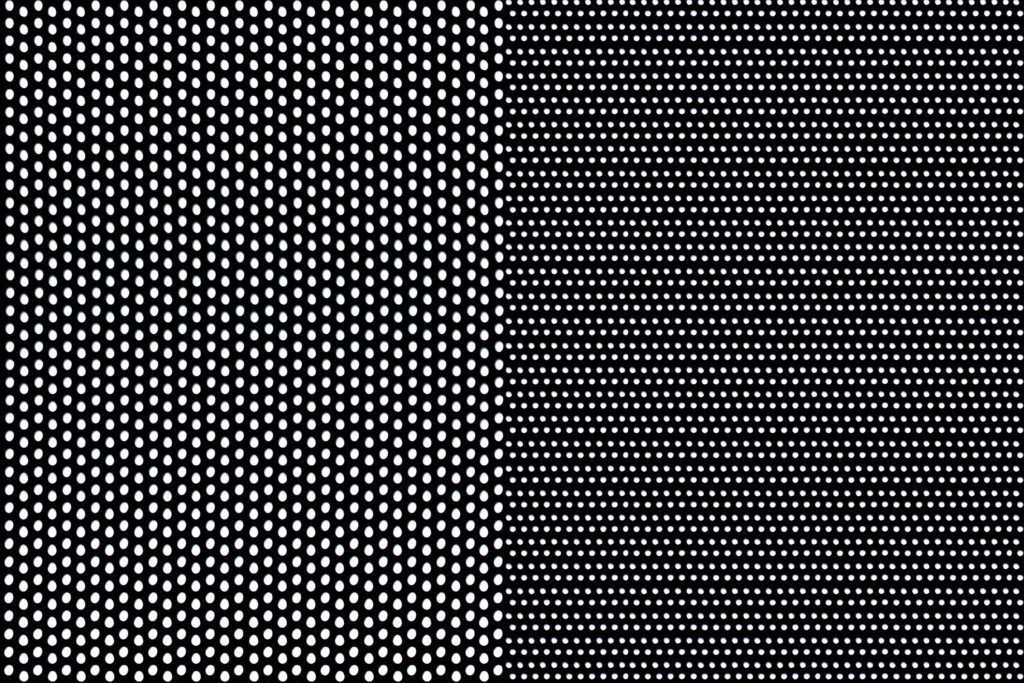
- Dot Size & Density: Adjusted to control light extraction and balance brightness.
- Gradient Design: Patterns are denser farther from the LED source to offset light loss.
- Algorithmic Optimization: Proprietary optical algorithms simulate multiple scenarios to find the most efficient configuration.
Laser Light Guide Plate Manufacturing
Once the ideal pattern is finalized, it is transferred to production using laser engraving technology:
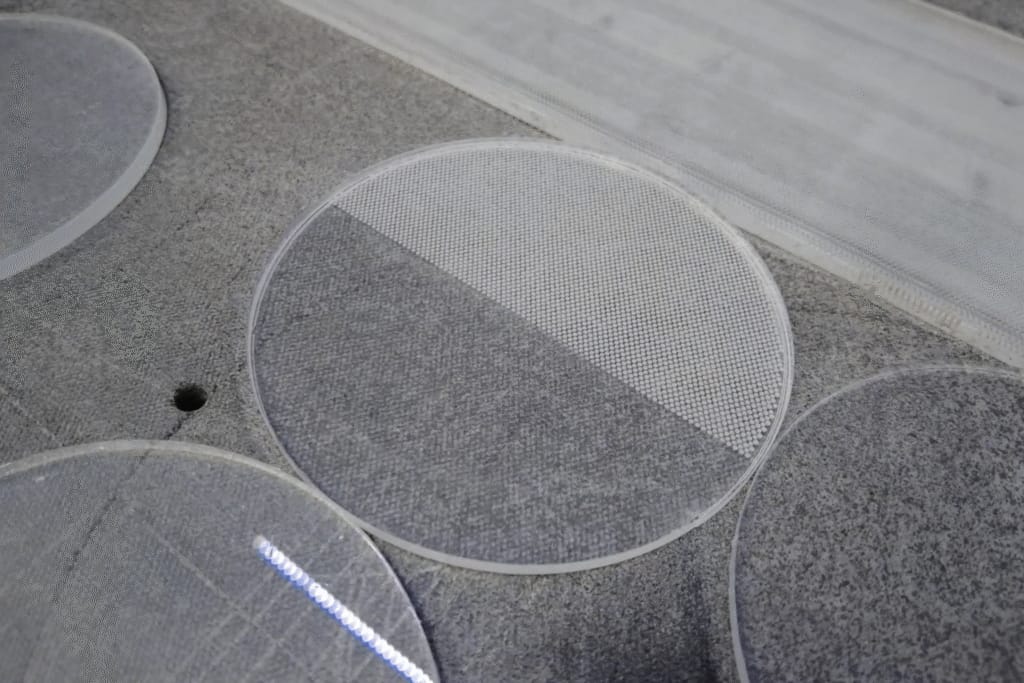
- A high-precision laser plotter engraves microscopic dots directly onto the surface of the acrylic LGP sheet.
- Laser intensity and pulse frequency are finely tuned to ensure uniform pattern depth and spacing.
- Laser-engraved LGPs provide excellent durability, optical consistency, and long product life, outperforming printed patterns in demanding environments.
Advantages of Light Guide Plates
1. Uniform Illumination
One of the most significant benefits of LGPs is their ability to distribute light evenly. Unlike traditional lighting methods that may create bright spots or shadows, LGPs ensure consistent brightness across the panel or luminaire. This makes them ideal for office panels, retail displays, and signage where uniform light is critical.
2. High Transmission Efficiency
LGPs provide high light transmission efficiency, meaning most of the light produced by the source reaches the target surface. This reduces energy consumption and heat generation, making LGPs a sustainable solution for energy-conscious lighting designs.
3. Versatility in Design
Light Guide Plates are highly customizable. They can be manufactured in various shapes, sizes, and thicknesses, allowing designers to tailor the LGP for specific LED lighting panels, architectural fixtures, or automotive interiors. The combination of custom LGPs and optical diffusion films and prismatic sheets provides flexibility for both standard and specialized applications.
4. Durability and Longevity
Made from optical-grade PMMA or polycarbonate, LGPs are resistant to temperature fluctuations, humidity, and UV radiation, ensuring long-term performance and minimal maintenance. Their durability reduces replacement costs and enhances the lifecycle of the LED lighting system.
5. Cost-Effectiveness
LGPs are not only efficient but also cost-effective. They can be mass-produced without compromising optical quality, making them suitable for large-scale LED panel production. Combining LGPs with diffusion films further reduces costs while maintaining high-performance lighting.
LED Use Cases & Applications
Office & Commercial LED Panels
LGPs are the optical backbone of flat LED panels. Combined with opal diffusion films and prismatic sheets, they enable UGR<19 low-glare compliance mandatory for office, educational, and workplace environments. The result is uniform, visually comfortable illumination across large panel surfaces.
Architectural & Decorative Lighting
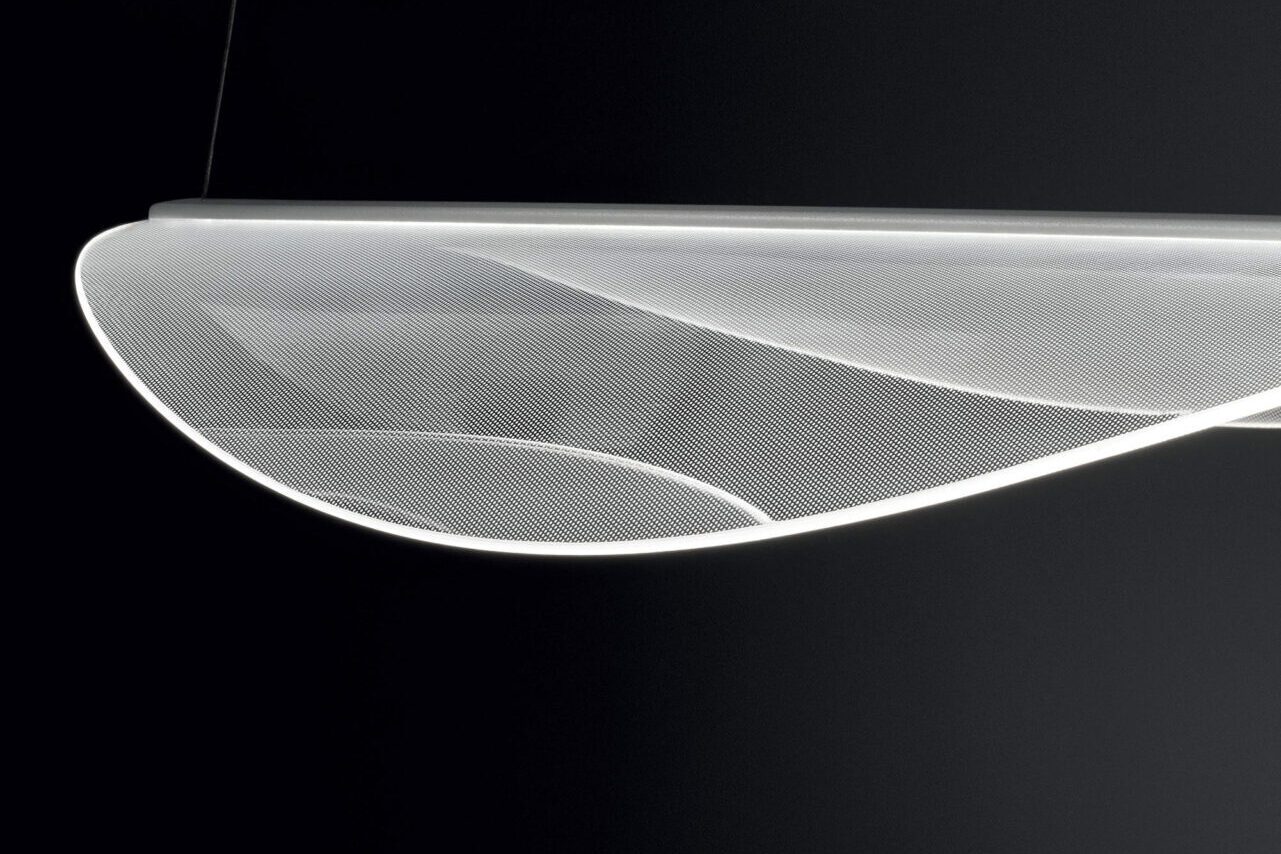
Custom-shaped LGPs enable ultra-slim light fixtures for cove lighting, illuminated ceilings, display cases, and feature walls. Their ability to emit uniform light from a thin profile makes them the preferred solution wherever traditional bulky luminaires are not viable.
E-Ink & R-LCD Display Lighting
Reflective display technologies like E-Ink and R-LCD cannot use a conventional backlight. Instead, a front light guide plate is placed on top of the display glass to inject diffuse illumination directly onto the screen surface, enabling dark-environment readability while preserving the display’s paper-like appearance and ultra-low power consumption.
Medical & Cleanroom Lighting
In hospitals, operating theaters, and cleanrooms, LGP-based LED panels provide the uniform, glare-free illumination required for critical visual tasks. Their smooth surface simplifies cleaning and reduces contamination risk.
Conclusion
The Light Guide Plate (LGP) is a cornerstone of modern optical lighting design. Its precision-engineered dot patterns, PMMA-based clarity, and laser-engraved uniformity enable ultra-slim, efficient, and visually appealing lighting solutions across offices, retail, automotive, medical, and display applications.
For more insights into LED light guide plate design, optical uniformity, or to request samples and technical collaboration, please contact us or explore resources like LEDs Magazine for deeper technical reading.