Light Guide Plate (LGP)
Product Details:
- Material: PMMA.
- Thickness Range: Standard 1–10 mm; custom options available for 12 mm and 15 mm.
- Sheet Sizes: Custom, with a maximum size of up to 1250 × 3050 mm.
- Light Uniformity: >85%.
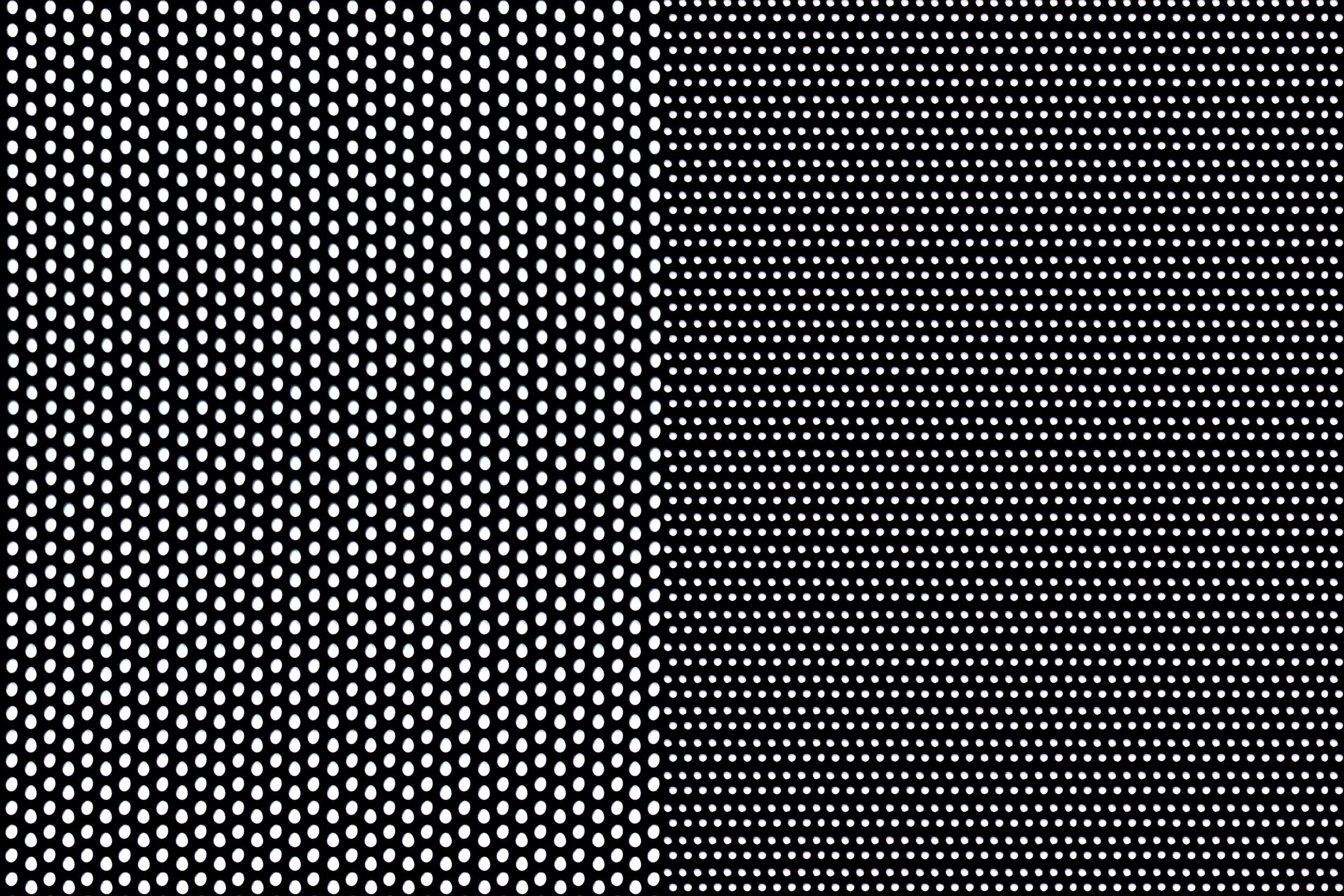
- Dot & Pattern Options: Various microdots, microlinear, and hot-pressed patterns.
- Fire Safety: Certified to UL 94 (HB)
- Edge & Cut Options: Laser cutting, edge polishing, and custom notching.
Description
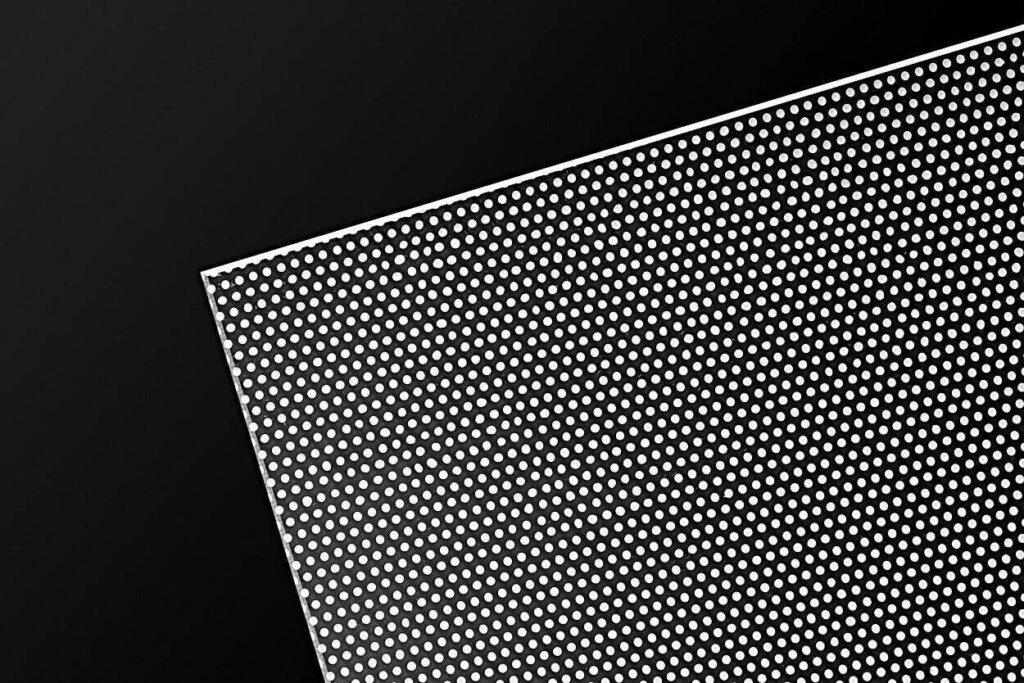
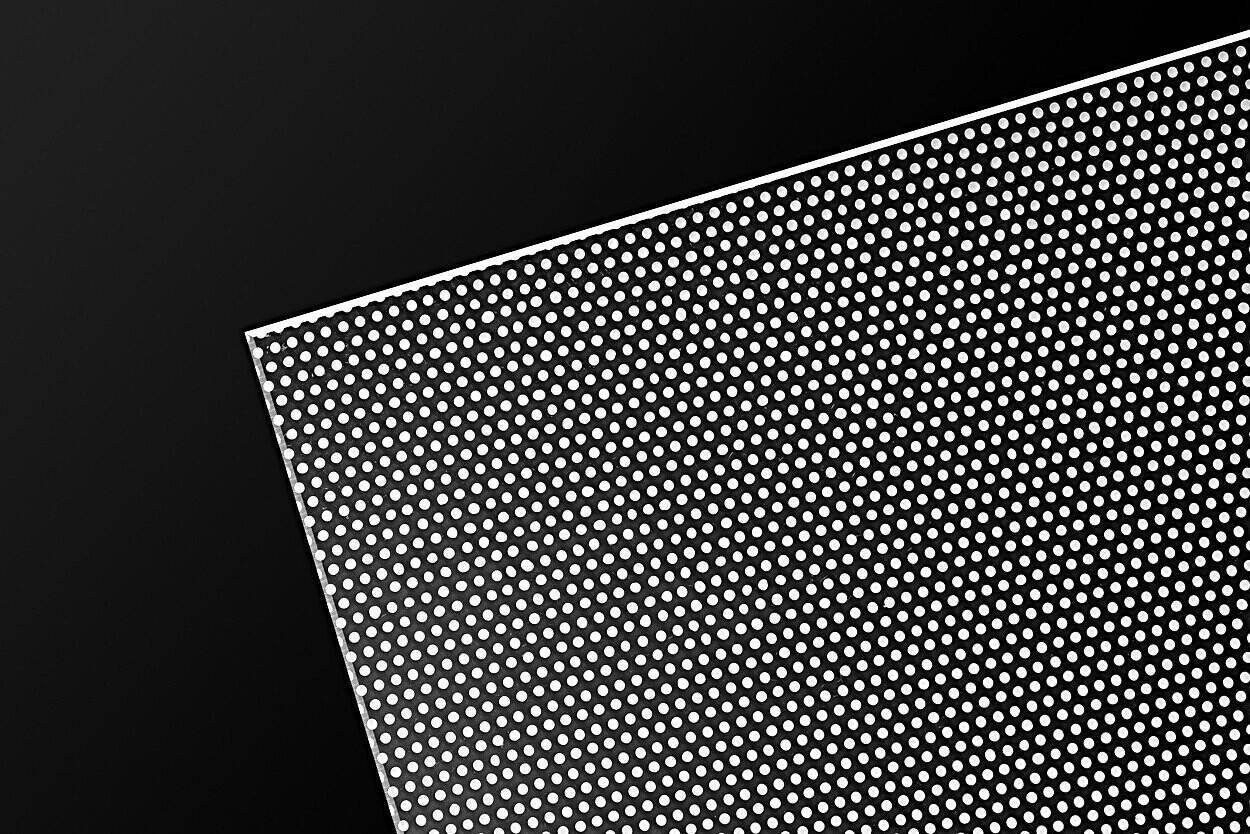
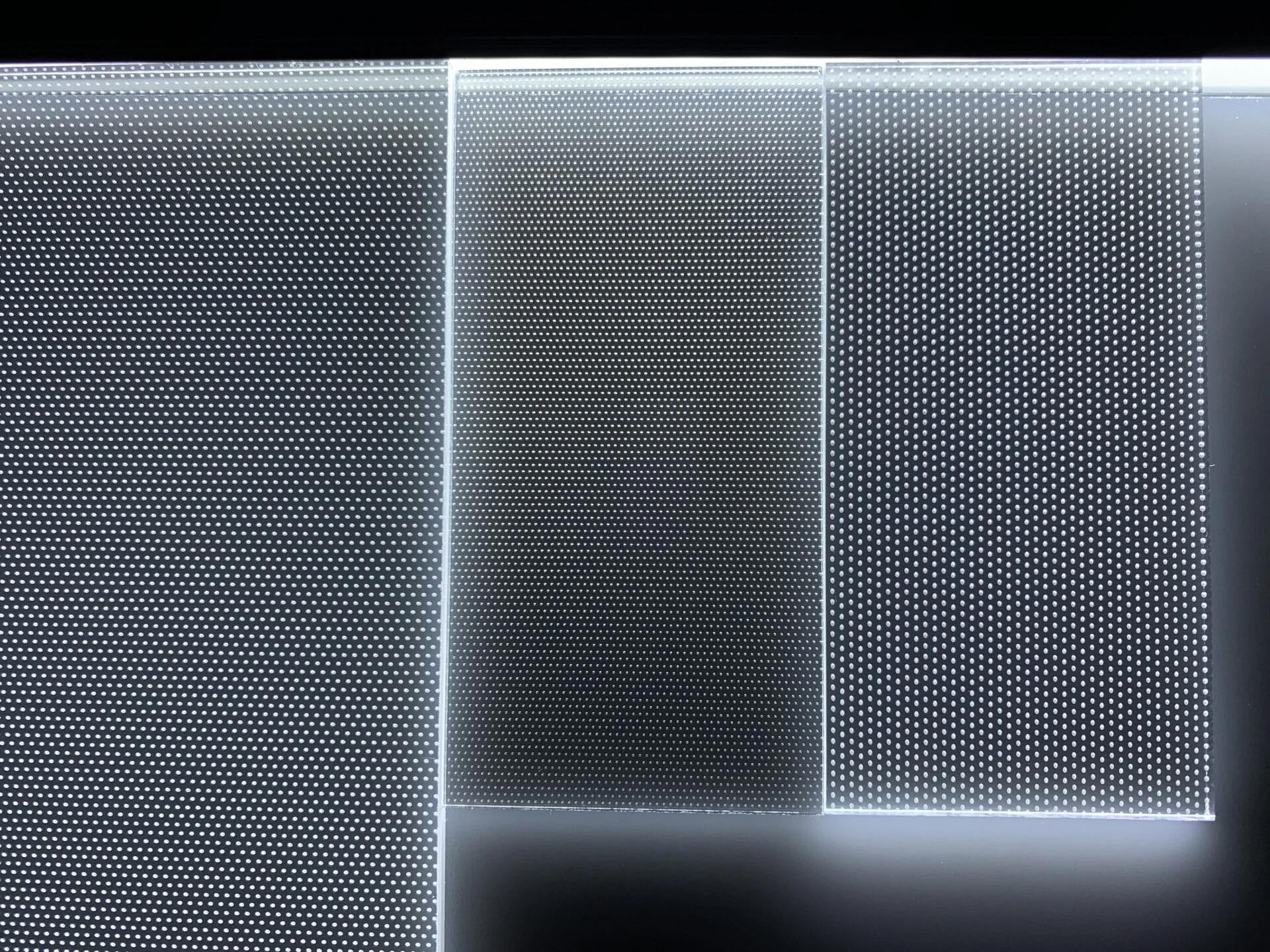
The Light Guide Plate (LGP) is a critical optical component designed to transform point or line light sources, such as LEDs, into a uniform, high-efficiency surface light. At Hexatron Technologies, our LGPs are manufactured using premium Mitsubishi optical-grade clear PMMA, ensuring maximum light transmission and long-term clarity without yellowing.
By utilizing state-of-the-art laser engraving technology, we produce light guides with exceptional uniformity (exceeding 85%) and the capability to cover large illuminated surfaces up to 2×4 meters. This precision allows for the creation of ultra-slim, edge-lit luminaires that maintain consistent brightness across the entire panel. Our commitment to flexibility means we offer custom cutting, machining, and fabrication with no Minimum Order Quantity (MOQ), supporting both prototyping and large-scale production.
Materials Comparison: PMMA vs PC
| Property | PMMA (our standard) | PC |
|---|---|---|
| Light transmission | ~92% (highest) | ~88% |
| UV stability | Excellent, no yellowing | Moderate, yellows over time |
| Impact resistance | Good | Excellent |
| Flame resistance | UL 94 HB standard; V0 grades available | V0 grades available |
| Cost | Medium | Highest |
| Best for | Premium lighting, long-life displays, outdoor-capable | High-temperature, fire-rated, vandal-resistant fixtures |
Our default material is Mitsubishi Shinkolite PMMA. If your project requires fire-rated (UL 94 V0), impact-resistant, or UV-specific grades, specialty variants are available from our High Performance Material line.
Laser LGP
One of the most used ones. The Laser LGP represents the pinnacle of backlighting technology. Unlike traditional silkscreen methods, our laser-engraved dot patterns are digitally optimized for each specific panel size.
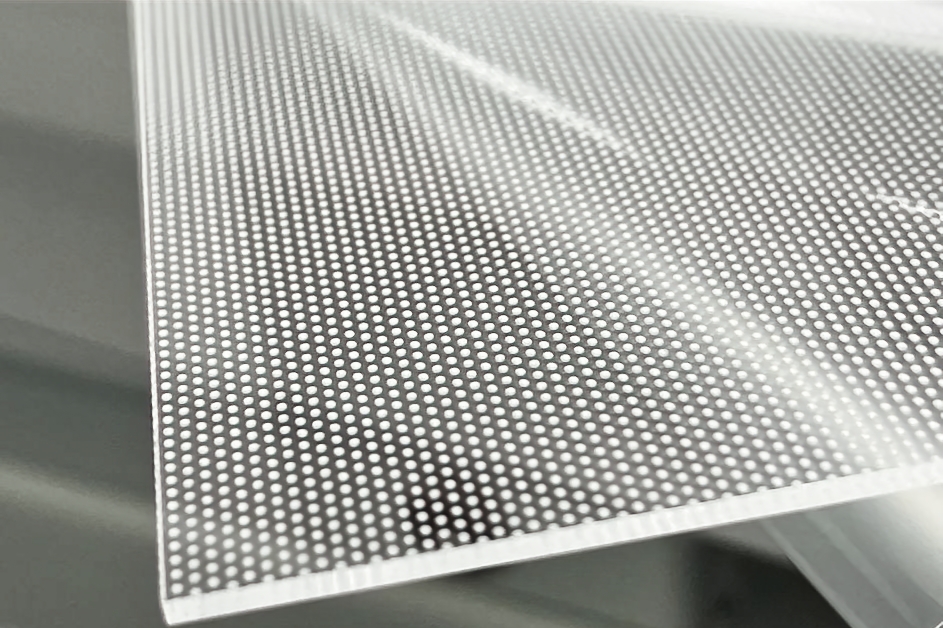
Laser etching ensures perfect light distribution even in large-format signage and architectural panels. The laser process creates permanent, high-precision micro-structures that offer superior brightness and a longer lifespan compared to printed alternatives.
Diffusive LGP
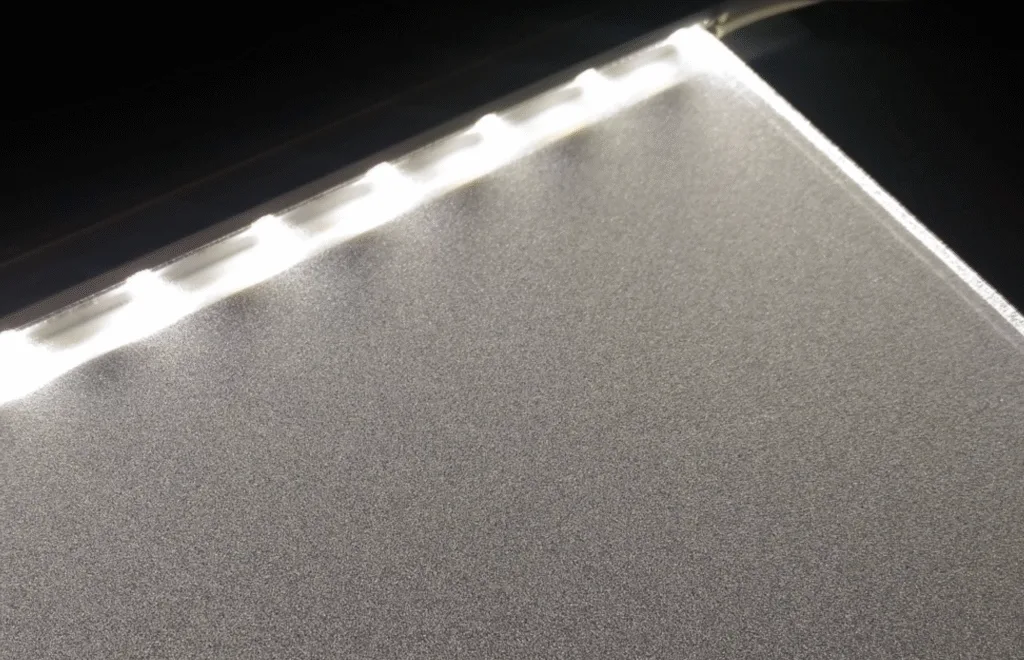
The Diffusive LGP is designed for applications requiring soft, visually comfortable light without visible hotspots.
By integrating advanced diffusion properties directly into the light guide, this product works without white reflector external diffuser.
Thin LGP
Specifically engineered for ultra-slim luminaires and space-constrained applications, these plates maintain high structural integrity and optical performance at reduced thicknesses.
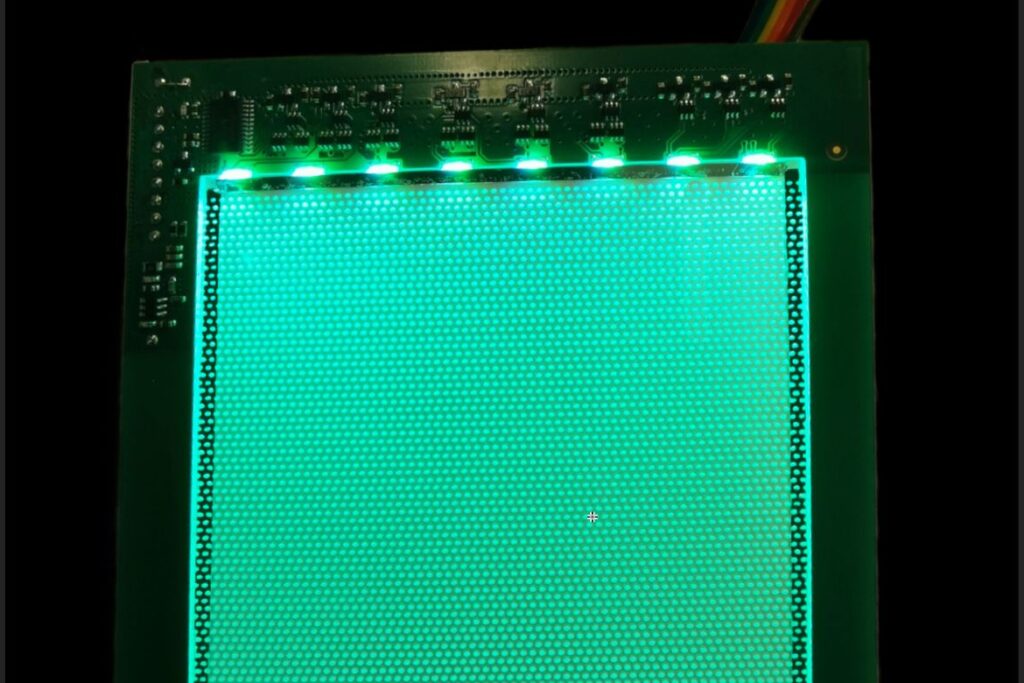
Our ultra-thin Light Guide Plate enables exceptionally slim backlighting solutions. When integrated with custom electronic controls, it delivers dynamic lighting effects that enhance product aesthetics and maximize visual impact.
Manufacturing Processes
There are three established methods for producing the microstructures that make an LGP work. Each has trade-offs.
Laser engraving (our primary process). A digitally controlled laser plotter engraves the dot pattern directly onto the plate surface. The pattern is recalculated for every project, LED count, pitch, panel dimensions, and target uniformity all feed into the design before engraving starts. No mold is required, which means no tooling cost, no minimum quantity, and no lead-time penalty for custom sizes. This is the right process for anything non-standard: large panels, custom shapes, low to medium volumes, or prototypes.
Silkscreen printing. Light-guiding dots are printed onto the surface using specialized ink. Fast, cost-effective at scale, and well-suited to high-volume runs of standard-size commercial LED panels. The trade-off is lower durability: the ink layer can degrade under sustained heat or UV exposure, and the pattern is fixed to a specific panel size because the screen itself functions as a mold.
Hot embossing / micro-structured. A high-precision mold transfers the pattern onto the plate surface under heat and pressure. The resulting plates have excellent optical consistency and are ideal for large production runs of a fixed design. Upfront mold costs are significant, so this process only makes sense for committed high-volume programs.
For most lighting projects, we recommend laser-engraved LGPs, particularly when the design is still evolving or when you need size flexibility. For commodity LED panel lights at high volume, printed LGPs can be cost-competitive.
FAQ
What is your minimum order quantity?
We have no MOQ. We can produce a single sheet for prototyping and scale to volume production on the same tooling. This is possible because our primary process is laser engraving, which doesn’t require per-size molds.
What is the difference between a laser LGP and a printed LGP?
Laser-engraved LGPs use a digital laser plotter to create micro-dots, allowing the pattern to be optimized per panel and producing consistent performance over long service life. Printed LGPs apply dots via silkscreen ink — lower cost at high volume but fixed to a specific size per screen and less durable long-term. For custom sizes and premium applications we recommend laser LGPs.
Do your light guide plates yellow over time?
Our standard PMMA LGPs use Mitsubishi optical-grade Shinkolite, which is UV-stable and does not yellow under normal conditions. PS-based LGPs can yellow under UV or sustained heat, so we recommend them only for indoor applications without direct sunlight.
What sizes can you produce?
Standard sheet sizes up to 1250 × 3050 mm in a single piece, in thicknesses of 1 to 10 mm (12 mm and 15 mm available on request). For illuminated surfaces larger than a single sheet, we design segmented LGPs with optical seam alignment.
Can you match a specific LED strip layout?
Yes. Send us your LED strip pitch, LED count, color temperature, and target uniformity, and we’ll simulate and optimize the dot pattern to match. This is where laser engraving outperforms printed patterns — each plate is optimized for its specific luminaire.
What’s the difference between Laser LGP, Diffusive LGP, and Thin LGP?
Laser LGPs are our flagship: laser-engraved dots, highest uniformity, suitable for most architectural and signage applications. Diffusive LGPs have diffusion built into the plate itself — often removing the need for a separate diffuser sheet. Thin LGPs are engineered for ultra-slim luminaires where total fixture thickness is constrained. See the linked sub-product pages for full specifications.
How do I get a sample or a quote?
We offer free sample kits. Send us your specification (size, thickness, material, LED configuration if known) via our contact form and we’ll send samples for evaluation. Standard lead time for custom samples is typically 7–10 business days.
Are your materials compliant with REACH, RoHS, and PFAS regulations?
Yes. Certification documents (REACH, RoHS, UL, and PFAS) are available on request. Tick the boxes you need on our contact form and we’ll send them with your quote.