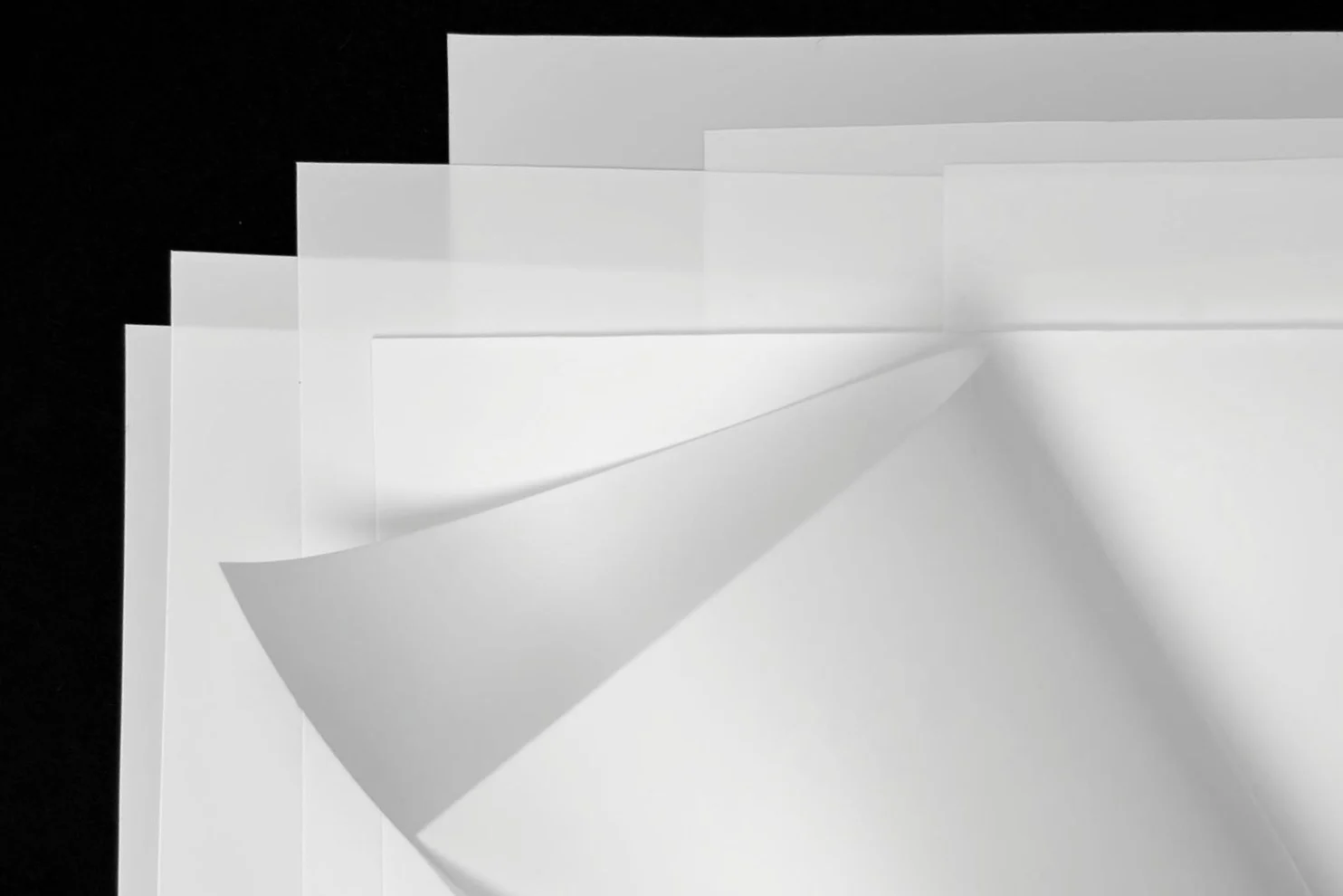
Optical Diffuser Films for LED Lighting
What Is an Optical Diffuser Film?
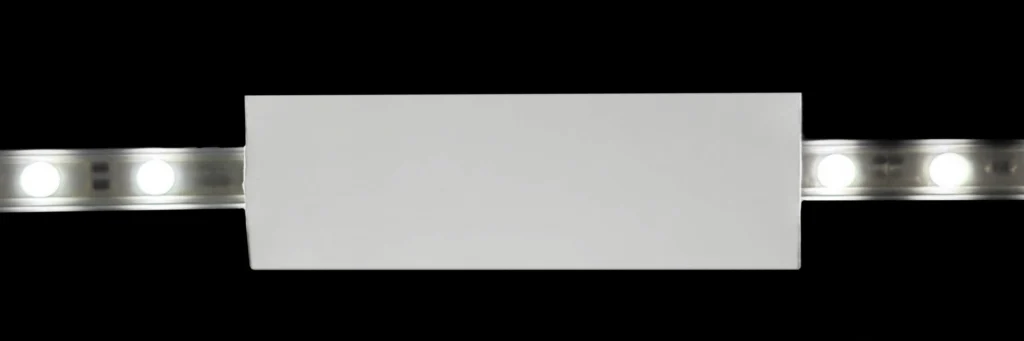
An optical diffuser film is a thin, flexible polymer film engineered to scatter and redistribute light uniformly. Placed within an LED luminaire or display backlight, it eliminates visible hotspots from individual LED chips, softens the light output, and produces a smooth, even luminous surface.
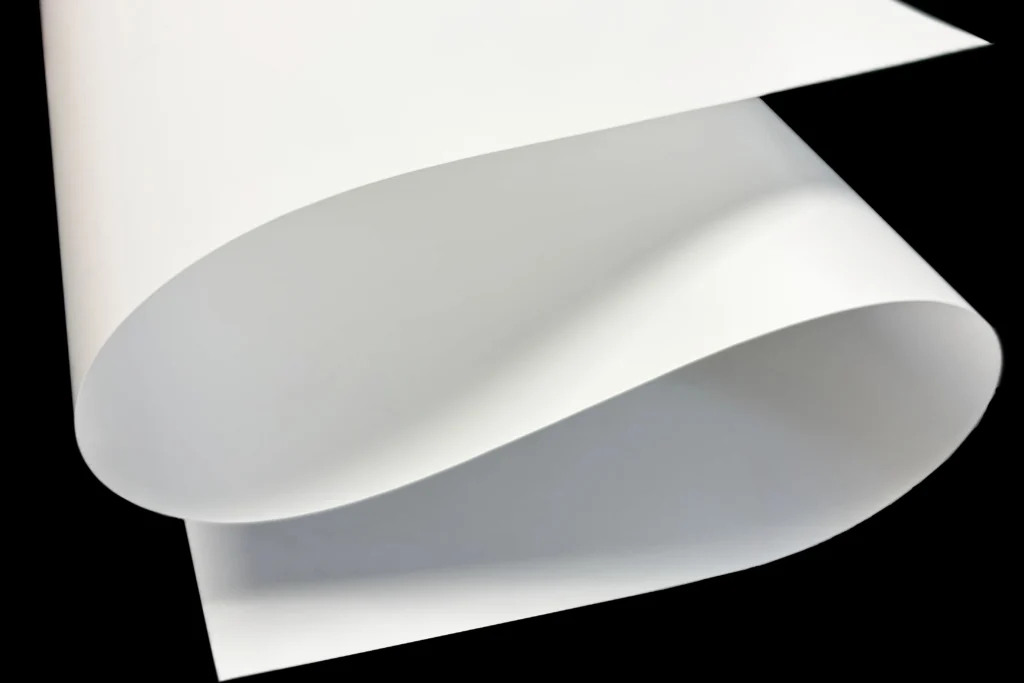
Unlike rigid diffuser sheets, diffuser films are flexible thin-gauge materials supplied in roll format. This makes them well-suited to constrained optical stacks in slim LED panels, backlit displays, and thin-profile architectural luminaires where a rigid sheet would add unwanted thickness or weight.
How Diffuser Films Scatter Light
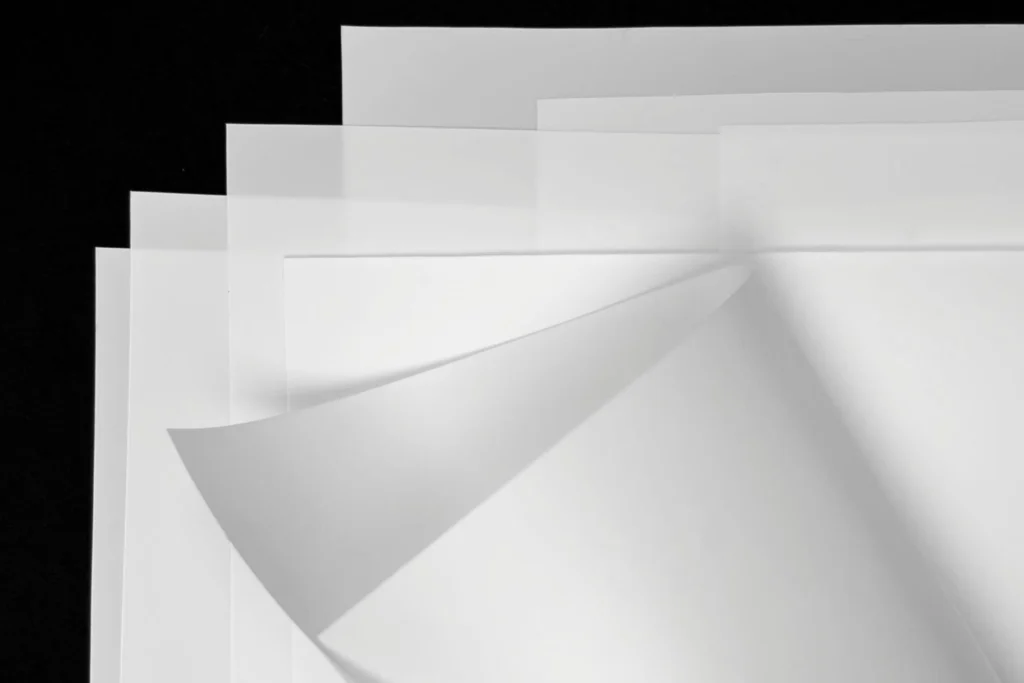
Light scattering in diffuser films is achieved through two complementary mechanisms:
- Surface scattering: A textured or frosted surface on one or both sides of the film breaks up the light beam at the point of entry, redirecting rays across a wider angular range and reducing the visibility of the LED array beneath.
- Volumetric (bulk) scattering: Diffusion particles embedded throughout the polymer matrix scatter light as it travels through the film. The concentration and distribution of these particles determines the film’s haze level and its effect on transmittance.
The balance between these two mechanisms defines the film’s character. High-transmittance films scatter lightly, preserving brightness while smoothing hotspots. High-haze films scatter more aggressively, producing a softer, more opal output at the cost of some lumen delivery.
Types of Optical Diffuser Films
Films are broadly classified by material substrate and by optical grade.
PC (Polycarbonate) Diffuser Films
PC substrates offer higher thermal resistance (up to approximately 140–150°C) and significantly better impact resistance. They are specified when operating temperatures exceed PET limits, when the assembly is subject to mechanical stress or repeated handling, or when the film needs to be thermoformed into a curved shape. PC films carry a higher unit cost and are slightly stiffer at equivalent thickness.
PET (Polyethylene Terephthalate) Diffuser Films
PET is the most widely used substrate for optical diffuser films in LED lighting. It offers thermal resistance up to approximately 120°C, good dimensional stability, high tolerance for precision cutting and slitting, and a lower cost per unit area compared to polycarbonate. PET diffuser films are the standard choice for LED flat panel lights, backlit signage, retail lightboxes, and general commercial luminaires.
By Optical Grade
High-transmission (approximately 85–92% transmittance): Smooths hotspots while preserving most lumen output. Used where brightness is the priority and LED pitch is fine.
Medium diffusion (approximately 75–85% transmittance): A balance between hotspot elimination and efficiency. The most commonly specified grade for general LED panel lighting, office luminaires, and retail displays.
Strong diffusion (below 75% transmittance): Maximum hotspot concealment. Specified when LED pitch is wide, or when a fully uniform opal appearance is required regardless of the LED array geometry.
Diffuser Film Grades at a Glance
| Grade | Approx. Transmittance | Haze Level | Substrate | Best For |
|---|---|---|---|---|
| High Transmission | 85–92% | Low | PET / PC | Brightness-priority panels, fine LED pitch, slim backlit signage |
| Medium Diffusion | 75–85% | Medium | PET / PC | General LED flat panels, offices, retail displays |
| Strong Diffusion | <75% | High | PET / PC | Wide LED pitch, fully uniform opal output, architectural lighting |
Key Optical Parameters to Specify
| Parameter | What it tells you |
|---|---|
| Light transmittance (%) | The fraction of incident light that passes through the film |
| Haze (%) | The fraction of transmitted light scattered more than 2.5° from the beam axis |
| Thickness (µm) | Affects how the film fits within a constrained optical stack |
| Substrate material | PET or PC — determines thermal and mechanical performance limits |
Transmittance and haze are related but not directly inverse. Both values should be confirmed on the supplier’s datasheet before production specification. Typical manufacturing tolerances are ±3% on transmittance and haze, and ±0.3 mm on cut-to-size dimensions.
How to Choose the Right Diffuser Film Grade
The right grade depends on the problem you need to solve and the constraints of your optical design. Use these as a starting point:
- Hotspot elimination is the main problem: choose strong diffusion (<75% transmittance). This grade handles wide LED pitch and deep diffusion without requiring additional optical layers.
- Efficiency is the priority: choose high transmission (85–92%). Fine LED pitch already provides good uniformity; the film only needs to smooth minor variations without sacrificing lumens.
- You need UGR<19 compliance: choose medium diffusion combined with a prismatic sheet. The diffuser film handles LGP output uniformity; the prismatic sheet controls high-angle glare. Neither element alone achieves UGR<19.
- The fixture runs hot (>120°C ambient): specify PC substrate instead of PET. PC maintains dimensional stability at temperatures where PET begins to soften.
- The luminaire is thin (<10mm depth): PET at 100–200µm gauge is the standard choice. It adds minimal stack thickness and is easier to handle in slim assemblies.
- UK commercial or public space installation: confirm the film substrate meets TP(a) rigid classification under UK Building Regulations Approved Document B before specifying.
Where Diffuser Films Fit in an LED Optical Stack
In a standard edge-lit UGR<19 LED panel, the optical stack from back to front is:
- White reflector film: redirects backscattered light forward to recover lumen output
- Light Guide Plate (LGP): distributes edge-injected LED light across the panel area
- Optical diffuser film: eliminates LGP hotspots and smooths the output
- Prismatic sheet: controls beam angle and reduces high-angle glare to meet UGR<19
The diffuser film sits between the LGP and the prismatic sheet, handling hotspot elimination so the prismatic sheet can focus entirely on angular control. In direct-lit panels without an LGP, the diffuser film sits directly above the LED array and provides the primary uniformity layer.
Diffuser Films and UGR<19 Compliance
Diffuser film is a necessary but not sufficient component for achieving UGR<19 glare compliance. A diffuser film eliminates hotspots from the LGP or LED array, smoothing the luminance surface so it appears uniform when viewed face-on. But UGR (Unified Glare Rating) measures glare at high viewing angles, not face-on uniformity. High-angle glare reduction requires a prismatic sheet or UGR<19 prism optic above the diffuser film to redirect oblique rays away from the line of sight.
For a complete UGR<19 optical stack, both layers must work together: diffuser film for uniformity, prismatic optic for angular glare control. Our guide to UGR<19 LED panels and optical film combinations covers how to combine opal film and prismatic sheets to meet EN 12464-1 requirements in office, retail, and commercial spaces.
For healthcare environments where both UGR compliance and chemical resistance are required, see our guide to hospital and cleanroom diffusers.
Fire Ratings for Optical Diffuser Films
Fire compliance is required by specifiers on most commercial, educational, and healthcare lighting projects. For diffuser films, the two most relevant standards are:
TP(a) Rigid — UK Building Regulations, Approved Document B: The highest thermoplastic classification for lighting diffusers. Required in protected corridors, stairwells, and most commercial ceiling installations. PC-substrate diffuser films typically achieve this classification inherently; PET films require independent test confirmation. Specifying TP(a) rigid removes the panel size and spacing restrictions that apply to TP(b) products. See our full guide to TP(a) fire ratings for diffusers and prismatic sheets.
GWFI (Glow-Wire Flammability Index), IEC 60695-2-12: Required for CE and ENEC luminaire certification. Tests resistance to ignition when in contact with a heated wire at temperatures from 550°C to 960°C. PC-based optical materials tested by Hexatron reach GWFI 960°C/2mm, the highest rating in the standard. Full compliance documentation is available on request. See our guide to GWFI compliance in LED lighting diffusers.
When specifying for projects that require fire documentation, request both the TP(a) test certificate and the GWFI datasheet from your supplier. Many luminaire certification programs require both together.
Applications
Office and commercial LED panels: Standard in UGR<19 compliant luminaires for open-plan offices, classrooms, and healthcare spaces, working alongside prismatic sheets to meet EN 12464-1 glare requirements.
Backlit displays and signage: Thin-gauge PET films conceal the LED array in retail lightboxes, menu boards, and exhibition stands, producing a uniform illuminated background.
Architectural luminaires: Custom-cut films are integrated into ceiling fixtures, cove lighting, and luminous panel systems where the LED source must be invisible from any viewing angle.
Automotive interior lighting: PC diffuser films are used in instrument panel backlighting and ambient interior lighting where thermal resistance and dimensional precision are critical.
Healthcare and cleanroom lighting: Combined with chemical-resistant diffuser sheets in hospital and cleanroom luminaires where both UGR compliance and cleanability are required.
LGP backlight modules: Placed directly above the Light Guide Plate in edge-lit LCD and e-ink display backlights to smooth output before it reaches the display stack.
Formats, Cutting, and Supply
Optical diffuser films are supplied in roll format with standard widths of 1000–1220 mm and roll lengths from 100 to 1000 metres. From rolls, they can be processed to:
- Custom-slit widths: High-tolerance slitting down to a minimum of 14 mm, supplied as reels or coils.
- Cut-to-sheet size: Roll-to-sheet converting matched to your panel dimensions.
- Kiss-cut or perforated: Score lines for precise positioning during panel assembly, reducing handling time on the production line.
- Adhesive-backed: Double-sided tape application for permanent bonding to a prismatic sheet or housing component.
Sampling with complex shapes is available without a mould fee, allowing optical performance testing before committing to production volumes.
Hexatron Technologies: Diffuser Films for LED Lighting
At Hexatron Technologies, we manufacture and supply optical diffuser films in PET and PC substrates across multiple transmittance grades, in roll and cut-to-size format. Films are available for standard panel dimensions or custom-cut to specification, with no minimum order quantity on sample requests. As a direct manufacturer — not a distributor — Hexatron Technologies controls the full production process from substrate selection through optical coating and precision slitting, ensuring consistent transmittance and haze values across production runs.
Our diffuser films are part of a complete optical film range that includes white reflector films, light blocking films, and prismatic diffuser sheets, allowing a full optical stack to be sourced from a single manufacturer. For bespoke requirements, our custom projects team handles non-standard formats, adhesive combinations, and multi-film assemblies.
Contact us to request a datasheet, material samples, or a quote for custom-cut formats.
Frequently Asked Questions
What is an optical diffuser film?
An optical diffuser film is a thin, flexible polymer film engineered to scatter and redistribute light uniformly. Placed within an LED luminaire or display backlight, it eliminates visible hotspots from individual LED chips and produces a smooth, even luminous surface.
What is the difference between PET and PC optical diffuser films?
PET diffuser films offer thermal resistance up to approximately 120°C and lower cost per unit area, making them the standard choice for LED flat panel lights, backlit signage, and general commercial luminaires. PC diffuser films withstand higher temperatures (up to 140–150°C) and offer better impact resistance and thermoformability, suited to demanding thermal environments or curved assemblies.
What transmittance grade should I specify for an LED panel?
Medium diffusion grades (approximately 75–85% transmittance) are the most commonly specified for general LED panel lighting, balancing hotspot elimination with efficiency. High-transmission grades (85–92%) suit applications where brightness is the priority. Strong diffusion grades (below 75%) are used when a fully uniform opal appearance is required regardless of LED array geometry.
What is the difference between haze and transmittance in a diffuser film?
Transmittance is the fraction of incident light that passes through the film. Haze is the fraction of transmitted light scattered more than 2.5° from the beam axis. The two values are related but not directly inverse — both should be confirmed on the supplier’s datasheet before production specification.
What supply formats are optical diffuser films available in?
Optical diffuser films are available in roll format (standard widths 1000–1220 mm), custom-slit widths down to 14 mm, cut-to-sheet sizes, kiss-cut or perforated sheets, and adhesive-backed formats. Sample requests carry no minimum order quantity.
Do optical diffuser films need to meet fire safety standards?
Yes, in most commercial and institutional projects. The main standards are TP(a) rigid under UK Building Regulations (Approved Document B) and GWFI under IEC 60695-2-12 for CE/ENEC luminaire certification. PC-substrate films typically achieve both inherently. PET films should be tested to confirm compliance before specifying in fire-sensitive applications. See our guides to TP(a) ratings and GWFI compliance for full details.