Custom Graphic Overlays: Material, Finish and Specification Guide
What are graphic overlays and front panels?
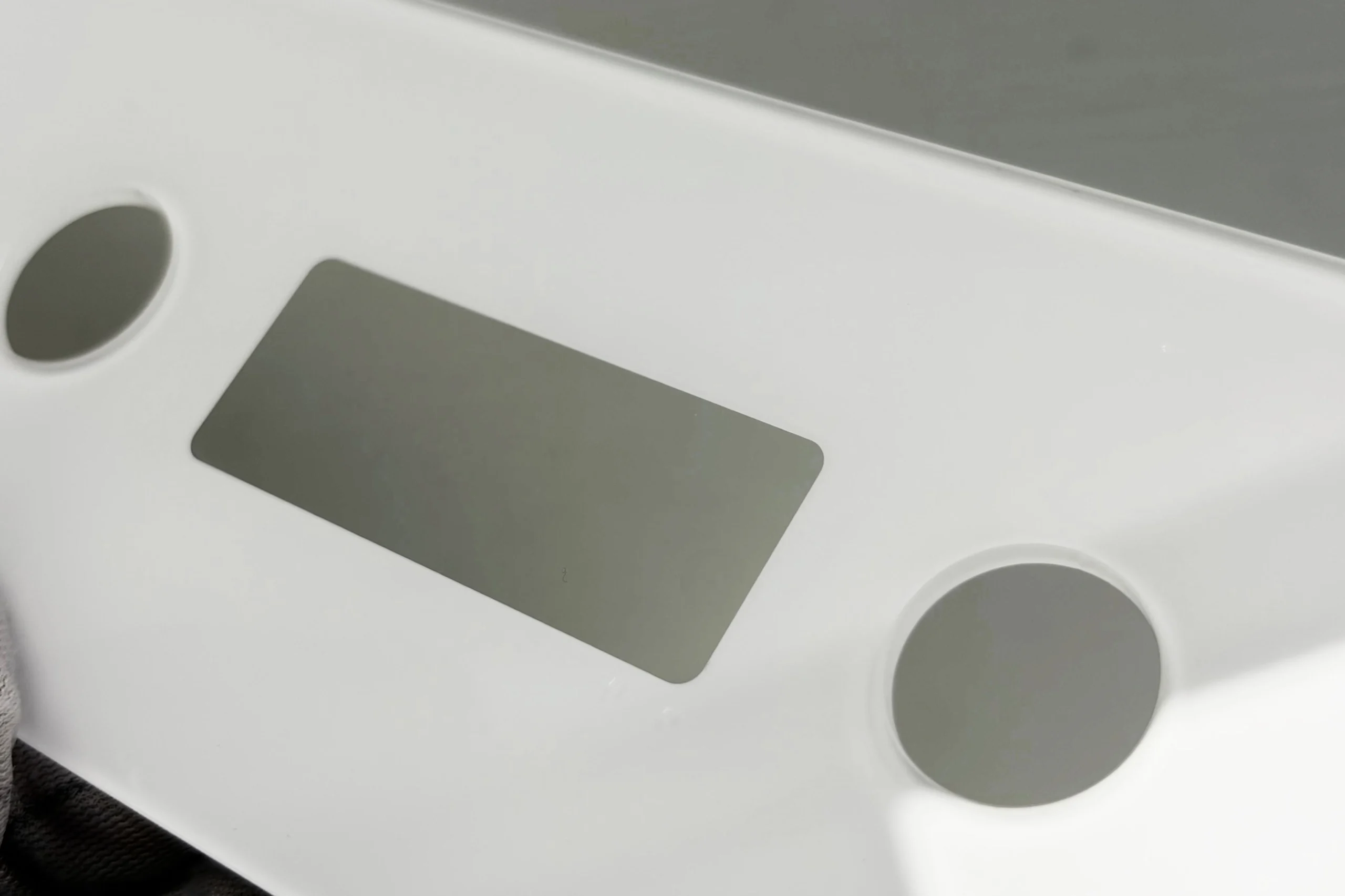
A graphic overlay is a thin, decorative and functional layer applied to the face of a device, a machine control panel, medical instrument, industrial enclosure, or consumer product. It serves three simultaneous purposes: it communicates (labels, indicators, brand identity), it protects (sealing against dust, moisture, and chemicals), and it functions (integrating tactile domes, windows, and LEDs).
Industrial front panels are thicker structural counterparts, rigid faceplates that form part of the enclosure itself, often milled or laser-cut from acrylic or polycarbonate sheet and combined with printed graphic overlays for a finished appearance.
Material selection: polycarbonate vs. acrylic
Two thermoplastic families dominate the graphic overlay and industrial panel market. Each has a distinct performance envelope; choosing correctly requires matching material properties to the application environment.
Polycarbonate (PC): Most Specified
- Exceptional impact resistance
- High optical clarity (up to 88% light transmission)
- Operating range −40 °C to +125 °C
- Easily embossed for tactile keys
- Available in 0.125 mm – 3.0 mm gauges
- UL94 V-0 flame-rated grades available.

PMMA (Acrylic)
- Superior UV and weathering resistance
- Higher surface hardness (Rockwell M97)
- Optical clarity up to 92%, best-in-class
- Excellent chemical resistance
- More brittle; not suited to impact applications
- Ideal for outdoor signage and lighting diffusers
Printing techniques compared
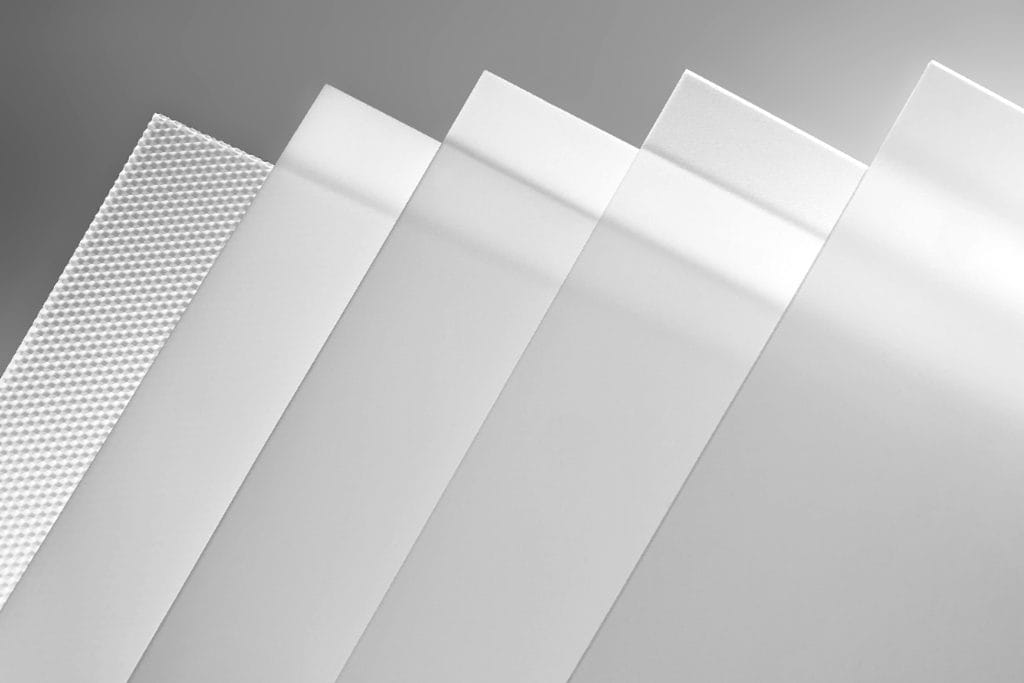
The choice of printing method determines durability, colour accuracy, minimum feature resolution, and cost per unit. For industrial applications, two methods are dominant, and each operates on fundamentally different principles.
Sub-surface (second-surface) printing
Inks are deposited on the reverse face of a transparent substrate, then viewed through the material from the front. The plastic itself acts as a hard protective layer over the print, providing outstanding abrasion and chemical resistance without any additional topcoat. This is the preferred specification for high-wear environments, machine tools, medical equipment, and military panels where legibility must be maintained over a 10-to-20-year service life.
Screen printing
A traditional process in which UV-curable or solvent inks are pushed through a mesh stencil onto the substrate surface. Screen printing excels in depositing thick, opaque ink layers, essential for white base coats, metallic effects, and the high optical density required for dead-front displays.
Digital inkjet printing
UV-curable digital printing enables photographic-quality gradients, short-run economics, and fast prototype turnaround without screen setup. Resolution typically reaches 1200 dpi. The trade-off is ink layer thickness, digital prints are thinner and may require an additional protective overlay or hardcoat for high-abrasion environments. Increasingly specified for bespoke product runs, spare-part panels, and co-branded OEM overlays.
Finishing options and surface treatments
Finishing transforms a printed panel into a field-ready component. The correct treatment specification depends on the operating environment, cleaning protocols, and UX requirements.
Anti-Scratch Hardcoat
A silicone- or acrylic-based hardcoat applied to the viewing surface increases pencil hardness from 2H (base PC) to 4H–6H. Recommended wherever cleaning with abrasive wipes or exposure to particulate environments is expected. Maintains optical clarity while reducing micro-scratching that would otherwise degrade readability over time.
Anti-Glare and Texture Finishing
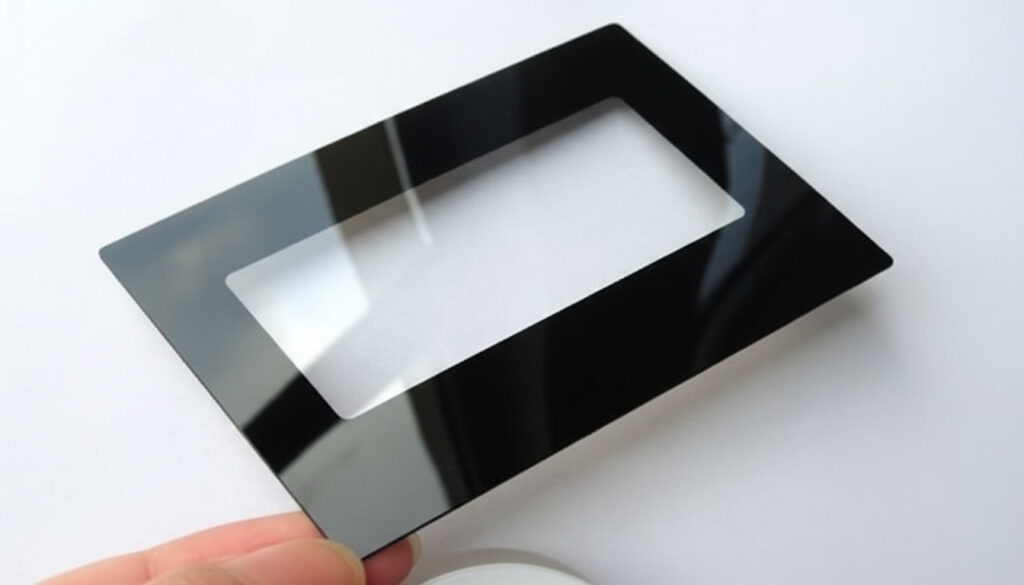
Matte and satin surface textures reduce specular reflections, improving readability in bright ambient conditions. Textures are applied via embossing tools, chemical etching, or bead-blasting of the tooling surface. Grain reference designations (e.g., Mold-Tech MT-11010) allow precise replication across production runs.

Specifying your panel: key parameters
A complete specification prevents revision cycles and ensures your panel performs as designed from first article inspection. Every enquiry should include the following parameters.
| PARAMETER | WHAT TO SPECIFY |
|---|---|
| Substrate material | Polycarbonate or PMMA; grade (optical, general purpose, flame-rated); thickness |
| Print method | Sub-surface, screen, digital; number of colours; Pantone references |
| Colour matching | Pantone / RAL reference + physical colour chip if critical |
| Finishing | Hardcoat grade; surface texture/gloss level; dead-front areas |
| Adhesive system | Permanent PSA; repositionable; selective adhesive (cut-outs) |
| Cut-outs and features | CNC and laser cutting. |
| Environmental rating | IP rating target; UV exposure; temperature range; chemical exposure list |
| Quantity and artwork | Print run volume; supplied artwork format (PDF/AI at 300 dpi+) |
Industry applications
Custom graphic overlays and front panels are specified across virtually every sector of industrial and commercial manufacturing, from medical diagnostic equipment requiring UL94 V-0 polycarbonate and chemical-resistant topcoats, to automotive interior trim using dead-front polycarbonate with selective LED backlighting, to laboratory instruments with PMMA hardcoats and solvent-resistant printing.
Get your specification right from the start
The right custom graphic overlay or industrial front panel begins with a complete specification. Use the parameter table above as your pre-enquiry checklist. Defining substrate material, print method, finish requirements, and environmental ratings upfront eliminates revision cycles and accelerates first-article approval.
Whether your application demands the chemical resistance of sub-surface printing on polycarbonate, the optical purity of PMMA for a backlit display, or the short-run flexibility of digital inkjet for a bespoke OEM overlay, material and process selection determines long-term field performance, not just initial appearance.
Hexatron Technologies supplies custom graphic overlays and industrial front panels to manufacturers across medical, industrial automation, and consumer electronics sectors. For fully bespoke requirements, visit our Custom Projects page. Submit your specification to discuss material selection and process options for your application.