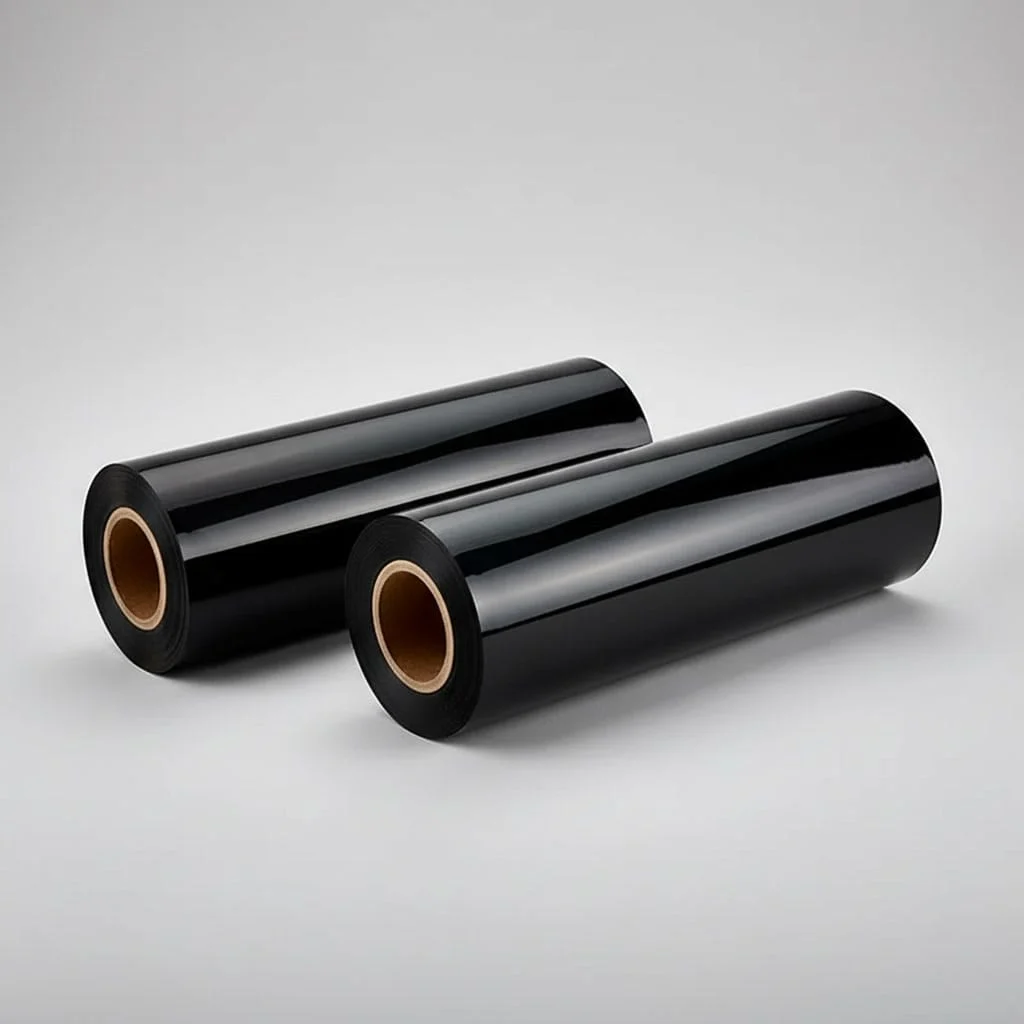
Light Blocking Films: The Complete Guide to Black PET, Optical Density & Light Shielding Materials
What Are Light Blocking Films?
Light-blocking films go by many names in the industry: black PET film, blackout film, optical density film (OD film), light shielding film, light absorption film, black shading film, non-reflective film, or simply opaque masking film. Despite the variety of names, they all share one defining property: 0% light transmittance.
High-gloss black PET light blocking film with a flexible, mirror-like surface with 0% light transmittance for precision masking in LED and display applications.
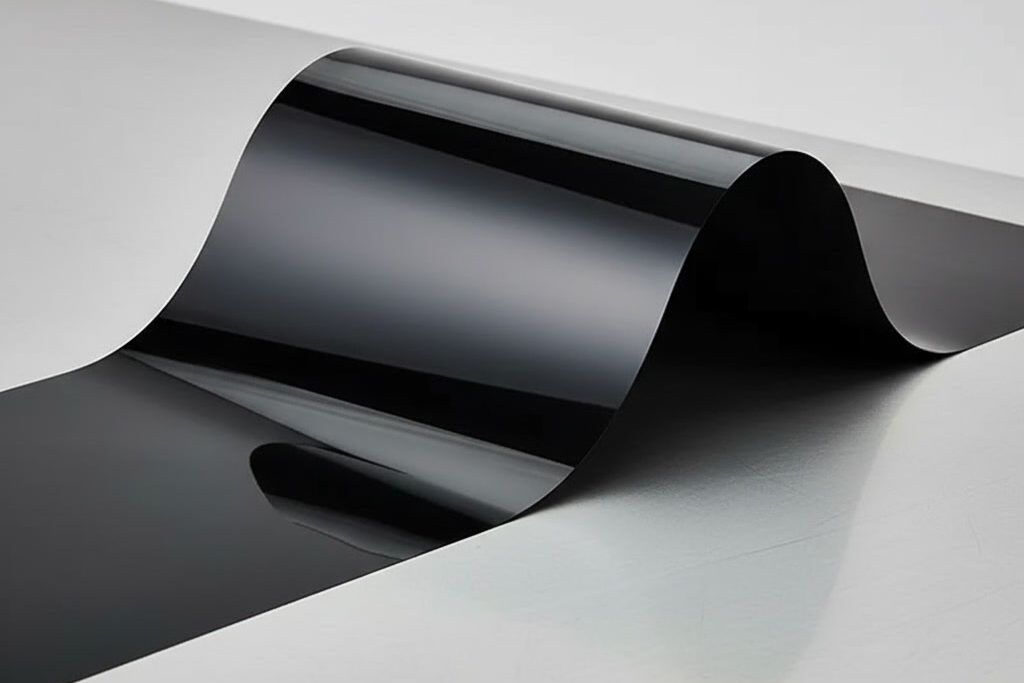
These films are precision-engineered polymer layers, typically made from black PET (Polyethylene Terephthalate) — designed to eliminate light transmission in a defined area. Where diffuser films spread light, and reflector films redirect it, light-blocking films stop it entirely. This makes them a critical component anywhere precise light containment, contrast control, or isolation is required.
At Hexatron Technologies, our light-blocking films are part of a broader family of Opto Films engineered for demanding optical applications in LED lighting, electronics, and display systems.
How Light-Blocking Films Work
Light-blocking films achieve total opacity through a combination of carbon black pigmentation embedded within the PET substrate and a carefully controlled matte surface finish. The result is a film that absorbs and scatters incident light rather than reflecting or transmitting it.
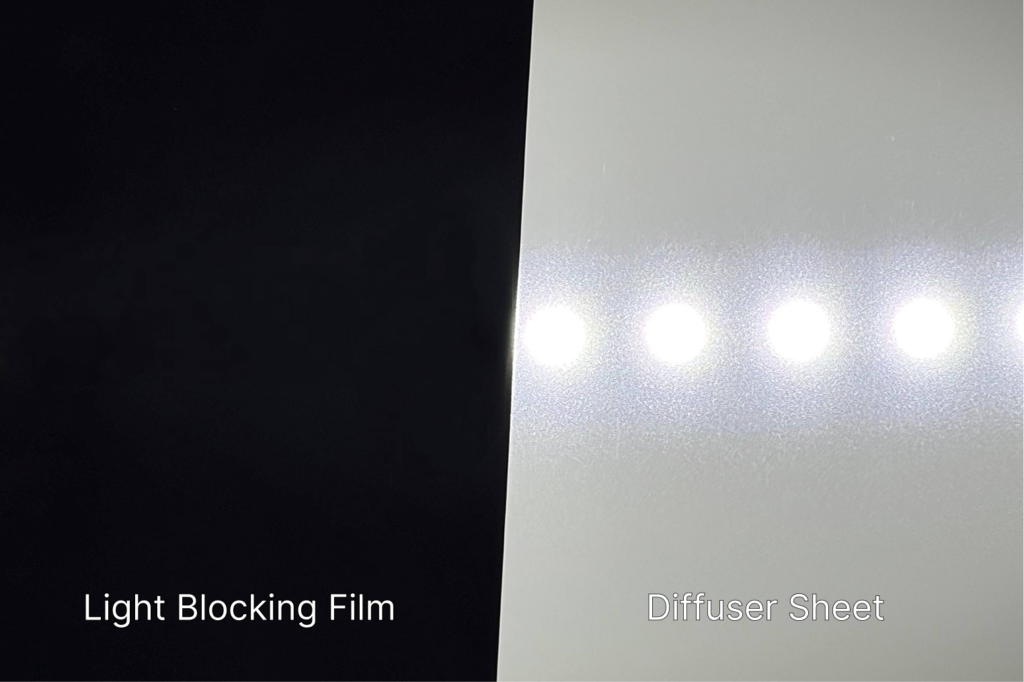
Light Transmittance: 0% — complete blockage across the visible spectrum
Surface Finish: Matte on both sides, minimizing surface reflections
Optical Properties: Light shielding and electrical insulation
Flexibility: Thin, flexible film compatible with standard cutting and converting equipment
Applications of Light-Blocking Films
1. LED Lighting Systems
In LED panel design, light-blocking films serve as precision masking layers that define where light begins and ends. They are used to:
- Prevent light bleed between zones in multi-zone luminaires
- Create sharp, clean edges in linear LED profiles and architectural lighting
- Eliminate ghosting in edge-lit panels where stray light escapes around the Light Guide Plate (LGP)
- Improve contrast between illuminated and non-illuminated sections in decorative lighting
When used alongside reflector films and diffuser films within the optical stack, light blocking films complete the system by ensuring all light exits only through the intended surface.
2. Display and Backlight Units (BLU)
In LCDs, tablets, monitors, and signage, blackout films act as masking layers around the edges of backlight units. They prevent light from escaping the bezel area, improving the display’s perceived contrast ratio and visual quality. OD films are also used between display layers to prevent inter-layer light contamination.
3. Automotive Electronics
Modern vehicles contain dozens of optical sensors, cameras, and display systems sensitive to stray light. Black PET shielding films isolate these components, preventing cross-contamination from ambient or operational light sources — including dashboard displays, ADAS camera housings, and interior ambient lighting systems.
4. Sensors and Imaging Systems
Photodetectors, IR sensors, and imaging modules require controlled light environments to function accurately. Light absorption films are used as shields and baffles around sensor apertures, ensuring that only intended light wavelengths reach the sensing element — critical in medical devices, industrial inspection systems, and consumer electronics.
5. Smart Devices and Consumer Electronics
From smartphones to wearables, non-reflective films are used internally to prevent optical noise between components — for example, shielding an ambient light sensor from the device’s own display backlight, or masking flex PCB areas from neighboring optical elements.
6. Precision Instruments and Industrial Equipment
In laboratory equipment, spectrometers, and optical measurement instruments, complete light isolation is essential for accurate readings. Light shielding materials provide a reliable, thin, and easily cut solution for internal baffling and compartment isolation.
Eclipse Series: Choosing the Right Thickness
Hexatron offers two standard variants under the Eclipse series, both manufactured from black PET:
- Eclipse100 — 100 µm (0.003 in.) — ideal for ultra-thin assemblies, flex PCB masking, and tight-tolerance stacking
- Eclipse250 — 250 µm (0.009 in.) — suited for structural masking, heavier-duty shielding, and easier manual handling
Special thicknesses are available upon request: 50, 75, 125, 150, and 188 µm. Standard roll widths are 1000 mm and 1090 mm, with lengths from 100 to 1,000 meters.
Custom Cutting and Fabrication — No MOQ
One of the most common challenges with optical films is converting standard rolls into the precise shapes required for assembly. Hexatron’s in-house converting capabilities remove this barrier entirely:
- Precision Slitting: Down to a minimum width of 14 mm, supplied as coils or reels
- Roll-to-Sheet Converting: Efficient conversion for mass production and inventory management
- Kiss-Cutting and Perforating: Custom shapes for easy peel-and-place assembly
- Adhesive Backing: Optional heat transfer double-sided tape for direct bonding
- Sampling Without Mold Fee: Complex custom shapes available as samples at no tooling cost
There is no minimum order quantity (MOQ). Whether you are prototyping or running full production volumes, Hexatron delivers with fast lead times.
Product Tolerances
- Thickness: ±3%
- Cut-to-size length / width: ±0.3 mm
- Light Blocking Optical Density (OD) variation: ±0.1
Why Engineers and Procurement Teams Choose Hexatron
- No MOQ: Order from prototype quantities to full production volumes
- Fast Lead Times: Quick turnaround for standard rolls and custom-converted formats
- Custom Cutting to Any Shape: Kiss-cutting and slitting without mold fees for sampling
- Adhesive Options: With or without backing depending on your process
- Full Optical Stack Supply: LGPs, diffuser films, reflector films, and blocking films from one supplier
- Technical Support: Engineering assistance for film selection and optical stack design
Frequently Asked Questions
What is the difference between a light blocking film and a blackout film?
They are the same product. Blackout film, light blocking film, opaque masking film, and light shielding film are all industry terms for the same category of 0% transmittance polymer films. The terminology varies by industry — display manufacturers tend to say “OD film” or “blackout film”, while LED lighting engineers often say “light shielding material” or “masking film”.
Can light blocking films be supplied with adhesive?
Yes. Eclipse films are available with optional adhesive backing (heat transfer double-sided tape), ready for direct bonding in your assembly process.
What is the minimum slit width available?
Our precision slitting goes down to 14 mm width — suitable for narrow masking strips in linear LED profiles and similar tight-clearance applications.
Are these films electrically insulating?
Yes. In addition to light shielding, Eclipse series films provide electrical insulation, making them suitable for use near PCBs and electronic components.
What industries use optical density films?
LED lighting, LCD displays, automotive electronics, medical devices, industrial inspection, consumer electronics, and precision instruments all rely on light shielding films for component isolation and contrast control.
Request a Free Sample
The best way to evaluate whether Eclipse light blocking films are right for your application is to test them. Hexatron offers free samples with no MOQ commitment — including complex custom-cut shapes without a mold fee.
View the Light Blocking Films product page for full specifications and product codes, or contact our team to request your free sample today.