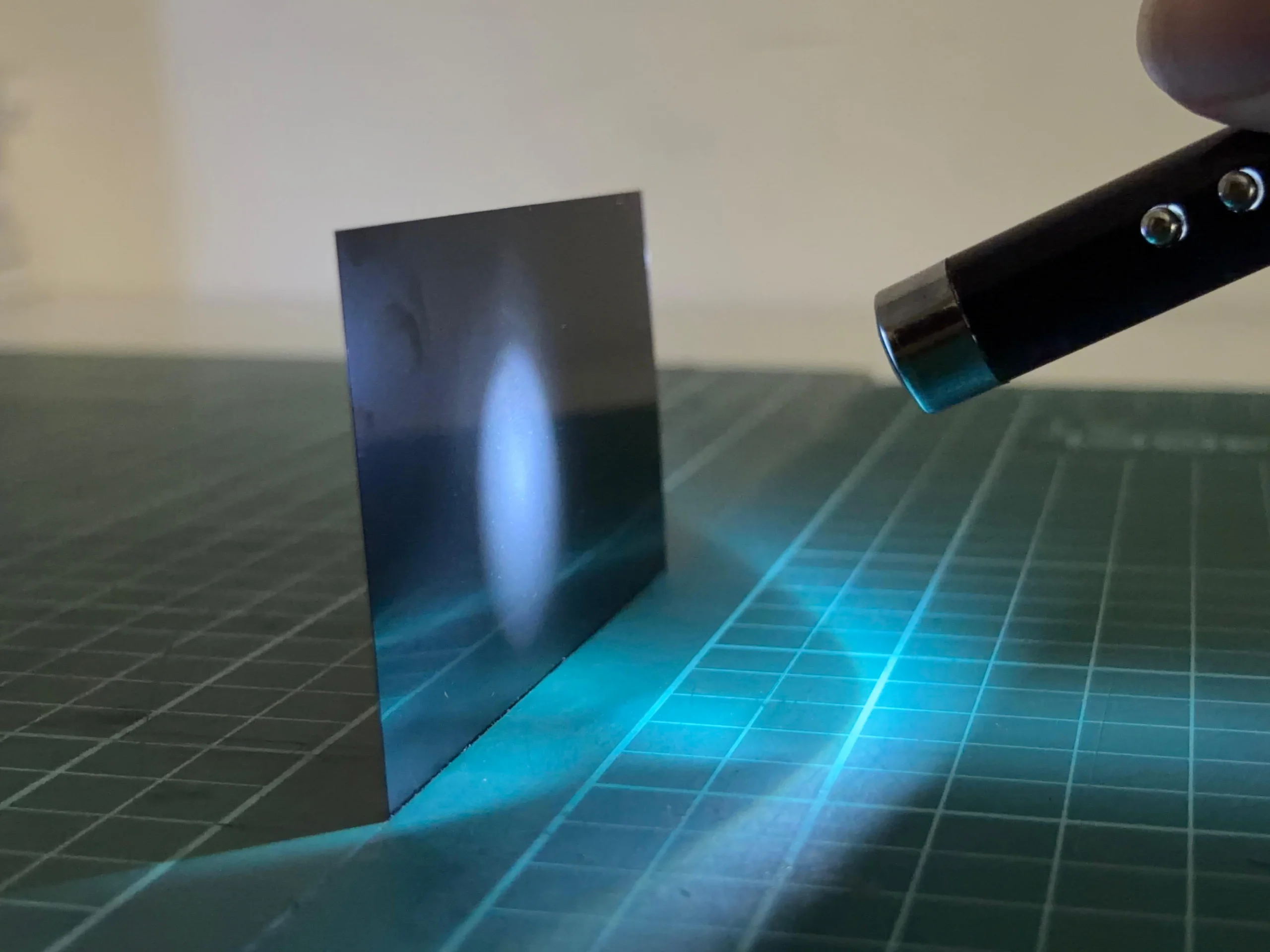
Black Diffuser for LED Lighting: Design, Aesthetics & Applications
A black LED diffuser is a precision optical sheet that simultaneously softens and distributes LED light while maintaining a dark, architectural aesthetic. Unlike standard white or opal diffusers, a black diffuser controls both the visual appearance of the fixture and the character of the light it emits — making it a key material choice for designers who refuse to compromise on aesthetics.
Whether installed in a sleek pendant luminaire, an architectural linear profile, or a retail display fixture, the right black diffuser transforms a functional component into a design statement.
How Black LED Diffusers Work
Standard opal diffusers scatter light using a white or milky substrate. Black diffusers work differently: they use a dark-pigmented optical plastic that absorbs a controlled portion of the light while transmitting and diffusing the rest. The result is a softer, lower-intensity luminous output with a much higher contrast ratio between the fixture face and the surrounding ceiling or wall.
The key variable is transmittance — the percentage of light that passes through the material:
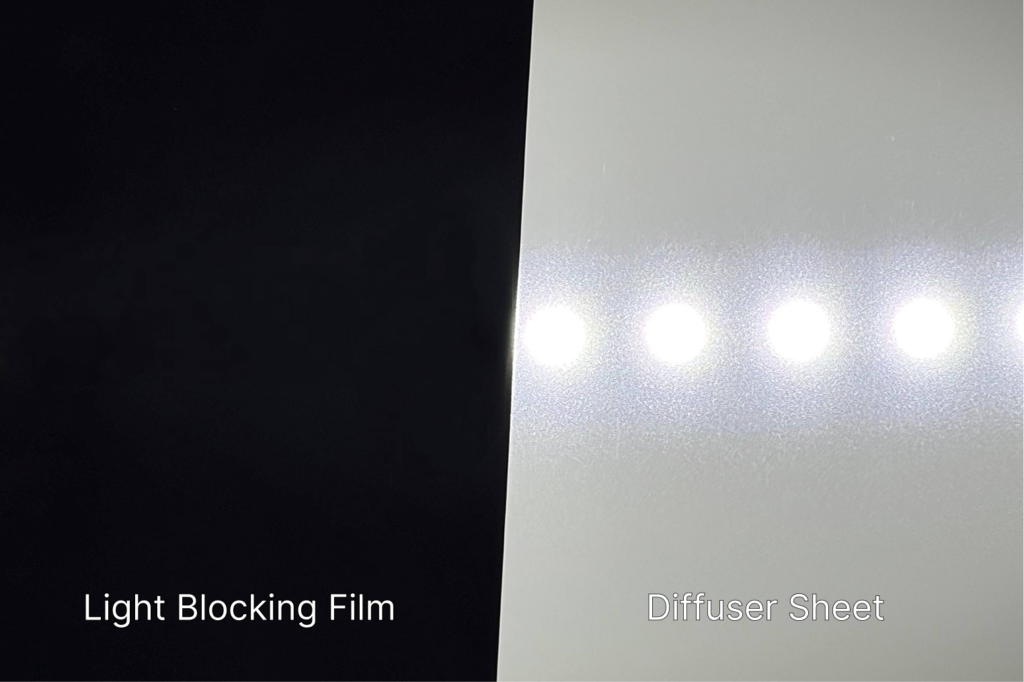
High transmittance (40–60%) — Noticeably dark when off; warm, moody glow when lit. Ideal for hospitality and accent lighting.
Mid transmittance (20–40%) — Strongly dark aesthetic with controlled output. Common in architectural linear profiles and pendant fixtures.
Low transmittance (under 20%) — Near-opaque appearance. The fixture appears almost completely dark when off. Used for high-contrast visual effects and directional low-glare lighting.
Material Options for Black LED Diffusers
The base material determines the mechanical performance, UV stability, and optical precision of your black diffuser. Three materials dominate the market:
Black Polystyrene (PS)
The most cost-effective option for black diffusers. Black PS offers consistent pigmentation and acceptable transmittance control for cost-sensitive projects. Its limitations mirror standard PS: lower impact resistance (IK02–IK04) and susceptibility to yellowing under prolonged UV exposure. Best suited for interior fixtures installed out of reach, where budget is the primary constraint and UV exposure is minimal.
Black PMMA (Optical-Grade Acrylic)
Optical-grade black PMMA delivers the best combination of aesthetics and light quality. Its higher-clarity base material produces a cleaner, more uniform light output even through dark pigmentation. PMMA is naturally UV stable — it will not yellow or fade over its service life, preserving the design intent long-term. Impact resistance sits at IK06–IK07, making it well-suited for most interior commercial applications where budget and looks matter equally.
Black Polycarbonate (PC)
Black PC combines the dark aesthetic with maximum impact resistance (IK08–IK10). This is the right choice for black diffusers in schools, public spaces, or anywhere the fixture may be subject to accidental or deliberate impact. PC is also thermoformable, enabling curved or shaped black diffuser panels for custom luminaire designs. UV-stabilized grades ensure the dark pigment holds its depth without fading.
Black Diffusers vs. Standard Opal: At a Glance
| Property | Standard Opal Diffuser | Black Diffuser |
|---|---|---|
| Appearance (off) | White / milky | Dark / near-black |
| Appearance (on) | Bright, even glow | Soft, controlled glow |
| Light transmittance | 50–90% | 10–60% |
| Visual contrast effect | Low contrast vs. ceiling | High contrast, dramatic |
| LED hotspot masking | Excellent | Excellent |
| UGR<19 compliance | Yes, with prismatic surface | Yes, with prismatic surface |
| Typical applications | Offices, schools, healthcare | Hospitality, retail, architectural |
Where Black LED Diffusers Excel
Architectural & Interior Design
Dark ceilings and feature lighting are a dominant trend in high-end interior design. A black diffuser allows the fixture face to disappear into a dark ceiling while still delivering precise, uniform light output. Linear profiles with black diffusers are particularly effective in restaurants, hotel lobbies, and gallery spaces where the light — not the fixture — should be the focus.
Retail Display Lighting
In retail environments, the goal is to spotlight the product — not the fixture. A black diffuser panel in a display case or track-mounted luminaire keeps the eye on the merchandise. The dark face minimizes distracting reflections on glass display cases and polished surfaces, which is critical in jewellery, electronics, and fashion retail.
Pendant & Decorative Fixtures
Custom pendant luminaires frequently use black diffusers for both aesthetic and functional reasons. The dark outer surface matches black metalwork and hardware, while the diffuser ensures the LED source is never directly visible — only a clean, even luminous surface is seen from below.
Industrial & Technical Environments
In factory floors, server rooms, and technical facilities with dark ceilings and infrastructure, a black diffuser provides a cohesive, intentional finish. Combined with a PC substrate for IK10 impact resistance, it is the practical, durable choice that also looks considered rather than incidental.
UGR<19 Compliance with Black Diffusers
A common question is whether black diffusers can achieve UGR<19 — the glare standard required for offices, classrooms, and task-lighting environments. The answer is yes, when the right optical structure is applied.
Hexatron’s black prismatic diffusers combine dark pigmentation with a precision micro-prismatic surface that redirects light downward and eliminates high-angle glare. This means you can achieve both the dark aesthetic and full UGR<19 compliance — without compromising either design intent or occupant comfort.
How to Specify a Black LED Diffuser
When requesting a black diffuser for your project, define these five parameters:
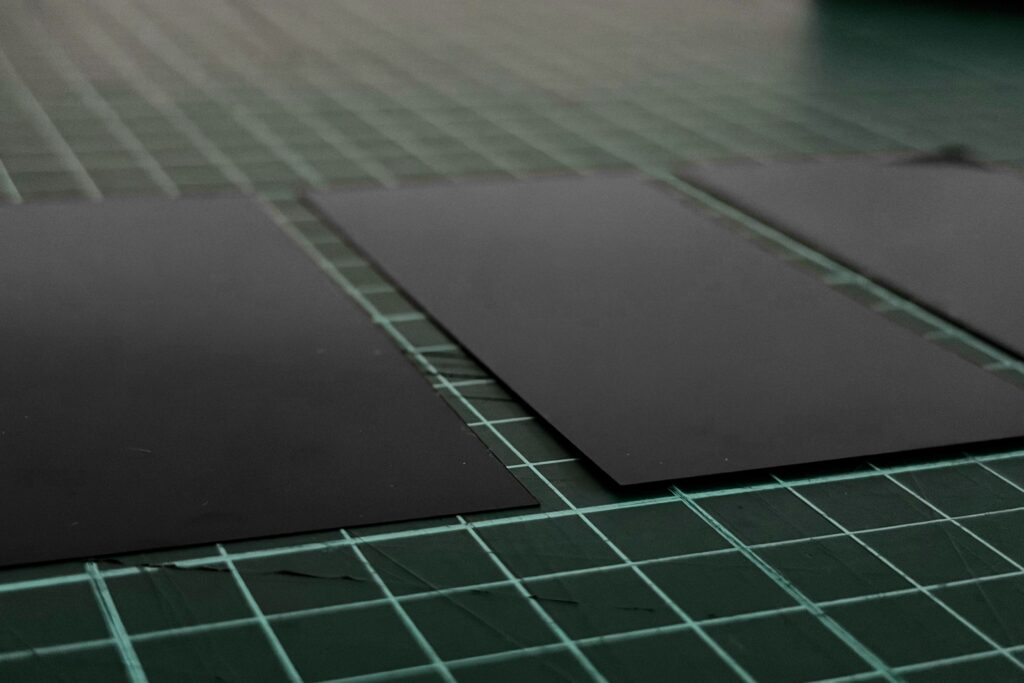
Material: PS (budget interior), PMMA (optical performance + UV stability), or PC (impact resistance + thermoforming)
Transmittance: Target % based on your desired light output and aesthetic. We can match a specific level or provide samples across a range.
Thickness: Typically 1.5mm to 3mm depending on rigidity and IK requirement
Surface finish: Matte (reduces visible surface reflections), satin, or glossy
Dimensions: Standard sheet format or custom-cut to your luminaire profile
Hexatron supplies black diffusers in standard sheet formats and custom-cut to your exact specifications — no minimum order quantity for samples. Contact our team to request a sample or discuss your project requirements.