Reflector Films
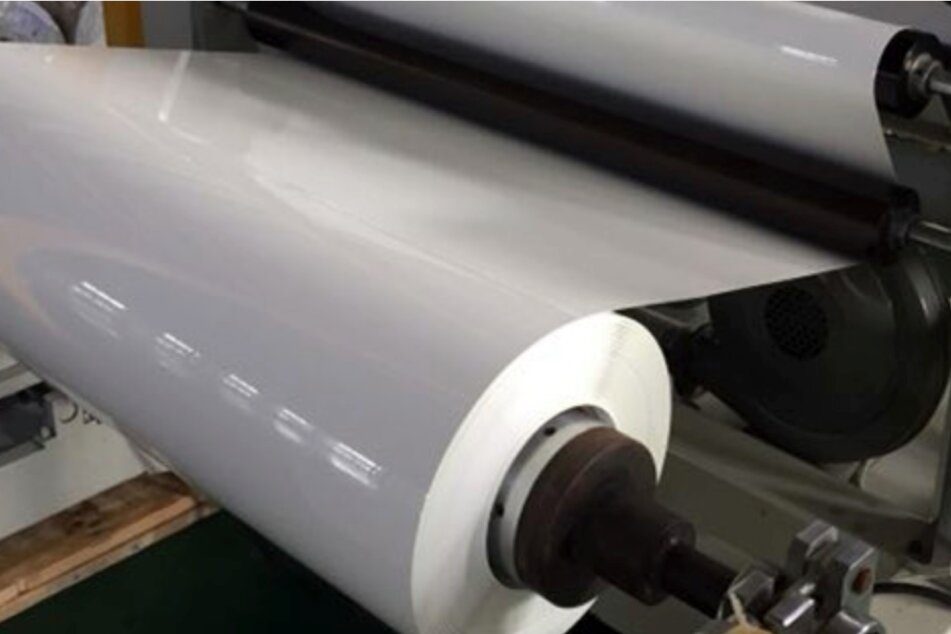
Reflector Films are high-performance optical films designed to maximize light efficiency by redirecting backward-emitted light toward the illumination surface. By reflecting unused light within a luminaire or backlight system, these films increase overall system brightness, reduce energy loss, and improve uniformity without increasing LED power.
At Hexatron Technologies, our reflector films are engineered from high-reflectivity polymer materials to provide consistent performance, durability, and precise optical control. They are ideal for LED panels, signage, displays, and architectural lighting, particularly in applications where efficiency and light containment are critical.
Certifications

Products Comparison
| Product Code | Material | Thickness (μm) mmin | Thickness (in.) mmin | |
|---|---|---|---|---|
| Reflex100 | PET | 100 | 0.003 | |
| Reflex150 | PET | 150 | 0.005 | |
| Reflex188 | PET | 188 | 0.007 | |
| Reflex225 | PET | 225 | 0.008 | |
| Reflex300 | PET | 300 | 0.011 | |
| Reflex500 PET* | PET | 500 | 0.019 | |
| Reflex300PC** | Polycarbonate | 300 | 0.011 | |
| Reflex400PC** | Polycarbonate | 400 | 0.015 | |
| Reflex500PC** | Polycarbonate | 500 | 0.019 |
(*) This PET reflector is designed with a unique light-blocking membrane embedded in the core of the film, effectively preventing light from passing through. This innovative feature ensures improved light control and enhanced performance for various applications.
(**) These PC white reflectors are ideal for thermoforming, offering versatility as they can be shaped into various forms. Known for their durability, they also withstand high temperatures
Performance Benefits
- Boosts luminaire efficiency by recovering light that would otherwise be lost
- Improves uniformity and brightness without increasing LED output
- Enables ultra-thin and compact designs
- Simplifies optical stack design by reducing the need for additional reflectors
- Enhances energy efficiency and lowers system power consumption
Applications
Integration & Optical Stack Use
Reflector Films are designed to complement other optical layers in a luminaire:
LED → LGP → Diffuser Film → Reflector Film → Final Output
By redirecting backward light, reflector films maximize optical efficiency and improve brightness uniformity across the entire panel.
More Information
Custom Cutting & Fabrication
- Precision Slitting & Rewinding: High-tolerance slitting of materials to custom dimensions, including narrow capabilities down to a minimum width of 14mm. Finished products can be supplied as coils or reels.
- High-Volume Converting: Efficient roll-to-sheet converting tailored for mass production and streamlined inventory management.
- Custom Fabrication: Precision kiss-cutting, score lines, and perforated designs engineered for easy assembly and reduced labor time.
- Specialized Thermoforming: Advanced thermoforming of Polycarbonate reflectors to achieve complex shapes and optimal light direction.
- Adhesive Application: Professional heat transfer double-sided tape mounting for secure, permanent bonding during final installation.
Value-Added Services: Sampling with complex shapes without mold fee.
Materials: Comparison of PET vs PC White Reflector Films
Use this comparison table to quickly understand the differences and find the best option for your lighting project.
| Property / Feature | PET (Polyethylene Terephthalate) White Reflector | PC (Polycarbonate) White Reflector |
|---|---|---|
| Thermal Resistance | Up to ~120 °C | Up to ~140–150 °C |
| Impact Resistance | Moderate | High |
| Chemical Resistance | Good (resists many solvents) | Good, slightly more sensitive to some solvents |
| Flexibility | Good for thin sheets | Slightly stiffer at same thickness |
| Die-cutting / punching | Easy, precise | Easy, slightly tougher |
Product Tolerances
| Property | Value |
| Thickness | ±3% |
| Cut-to-Size Length / Width | ±0.3 mm |
| Reflectance Rate | ±2% |
| Light Transmittance & Haze | ±3% |
| Light Blocking Optical Density (OD) variation | ±0.1 |
Packing
1. Standard Packing Options
- Rolls:
Optical films are rolled on anti-static paper or plastic cores (6″) and tightly wound with protective liners to prevent telescoping and dust contamination.
Each roll is packed in a reinforced carton or crate for safe shipment. - Final Cut / Sheet Sizes:
Cut-to-size films are individually interleaved with protective films or kraft paper and stacked flat to prevent scratches, bending, or warping during transit.
2. Surface & Edge Protection
- Edge & Corner Protection:
Roll edges and sheet corners are secured with foam guards or plastic protectors to prevent damage from handling or vibration during shipping.
3. Palletization & Securing
- Rolls and flat stacks are palletized or crated.
- Straps, shrink wrap, and corner reinforcements keep materials stable throughout transit.
- Maximum pallet load: 800 kilograms or as specified per film thickness to prevent compression or deformation.
4. Shipping & Storage Recommendations
- Flat Storage:
Store cut-size films on a flat, clean surface, avoiding uneven pressure. - Roll Storage:
Store rolls upright on cores or suspended horizontally to prevent deformation and edge curling. - Environmental Conditions:
Maintain room temperature (20–25°C) and humidity (40–60%). Avoid direct sunlight or extreme temperature changes. - Handling:
Always wear lint-free gloves when removing protective liners to prevent contamination and fingerprints.